A return to favour
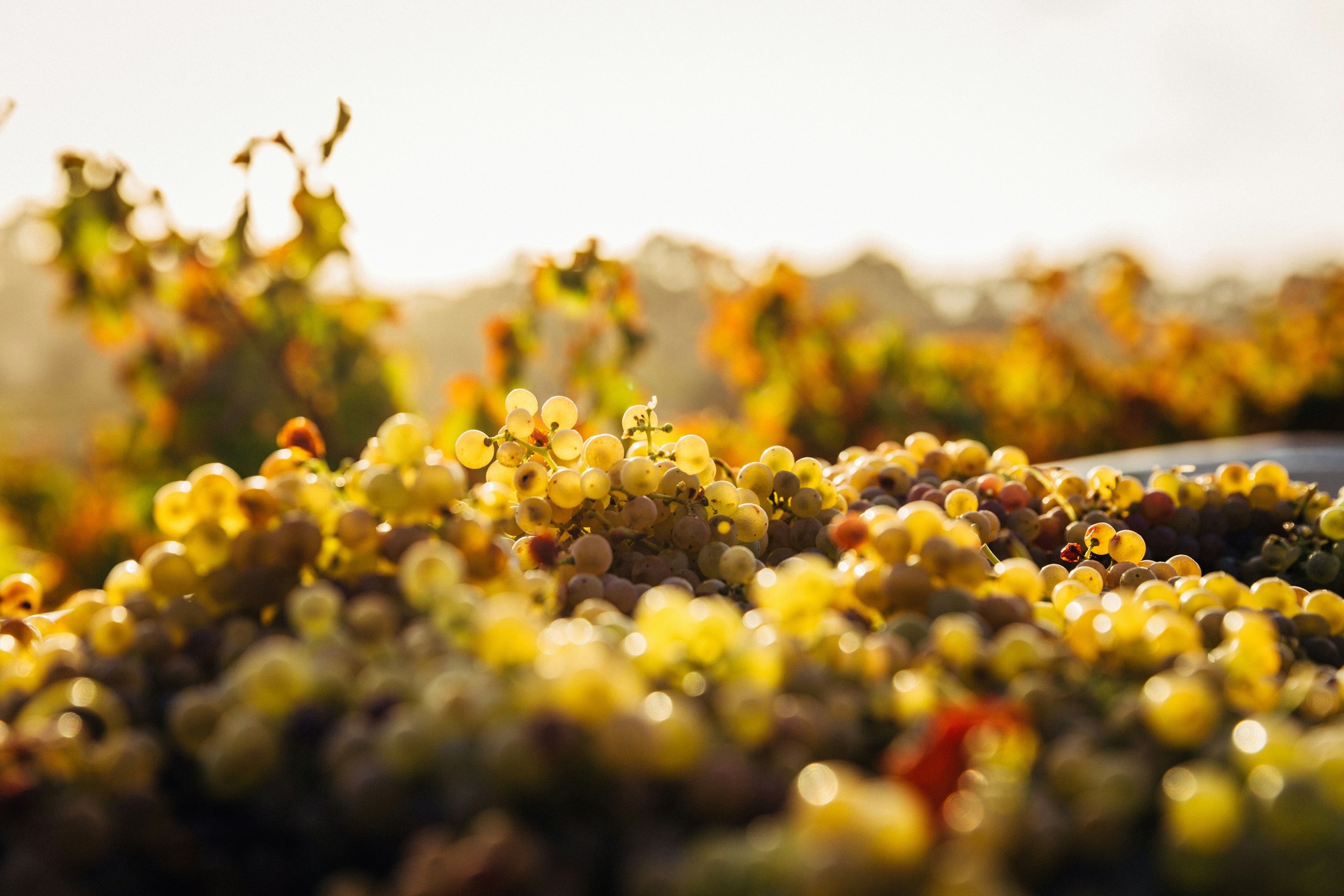
The enthusiasm aroused by Petit Verdot among the elite of the Médoc châteaux may come as a surprise, for a grape variety that a priori had nothing to commend it and drew its sole glory from the black period of phylloxera, when it had behaved valiantly. Indeed, favouring the palus soils bordering the Gironde estuary, where the water tables lie close to the surface, it had there the means to protect itself from the formidable insect that wreaked such havoc in the Bordeaux vineyard, as everywhere else. However, this quality was expressed at the expense of all those likely to make it a respectable wine. Thus an excessively luxuriant foliage, matchless fertility, off-putting tannins and a perilous harvest are among the reasons that led to its inexorable decline. Its comeback has therefore been laborious and owes its fulfilment only to the global warming that has characterised the last two decades. This is moreover attested by the remarkable growth in the area of its plantings, from 375 ha in 2000 to 1,373 ha in 2024, a figure which nevertheless marks their stagnation, since it has been stable since 2020.
In the Médoc, the strengths of Petit Verdot have therefore now been recognised, provided it is planted outside the soil to which it has always been confined, on nobler soils, and care is taken to tame its spirited nature. Managing it thus requires rigorous discipline, in particular to curb its tendency to produce heavily. As for its harvest, it must imperatively take place within the very short window of its full ripeness, beyond which rot sets in and the crop is lost. Nevertheless, its hardiness gives it some advantages, and not the least, such as resistance to the dominant vine diseases, downy mildew and powdery mildew. With the usual precautions, its measured and precise contribution makes it a precious ally, sometimes even indispensable, in the composition of the most illustrious crus, with a few exceptions. To appreciate its role, the best course is to let those who make the most judicious use of it speak.
Let us meet them below…
A Pyrenean origin?
In the current state of knowledge, ampelography places the origin of Petit Verdot in the Pyrenees, and more precisely in the Béarn, distinguishing it within the group known as the verdots, varieties with black berries. These are specific in the sense that their morphology brings them close to certain wild vines called lambrusques. Petit Verdot is, moreover, called “lambrusquet” in its original cradle. Established in the Bordeaux region for a long time, it is more particularly mentioned in the 19th century, when it is even presented in laudatory terms in a publication dating from 1841, concerning vines planted on the Garonne palus at Les Queyries, a site now in the heart of the Bordeaux conurbation. Its difficulty in ripening until recently, proven before global warming, might explain its successful migration to Spain and Portugal, where it sometimes expresses itself as a single varietal in an ambitious style. Extremely rare cuvées of this type are produced around the world, notably in renowned regions of California (Napa Valley) and Argentina (Mendoza).
Testimony of Éric Boissenot, a privileged blender
The oenologist Éric Boissenot, in charge of the blends at the Médoc’s most eminent châteaux, sees Petit Verdot from the angle of a craft in which one must know how to grasp and devise a great style in each vintage. Thus, from one year to the next, he gauges Petit Verdot to decide on its contribution to the château’s grand vin. Always confidential, its addition is nonetheless decisive in completing a blend, even if it does not reach 1% of the total, as at the eminent Château Lafite-Rothschild, an eloquent example in this respect. He explains such influence by its “strong character”, brought by tannins that can be perceived as “violent” in a context where refinement comes first. He also points out that its structuring nature allows it to back up Merlot effectively in this respect where there is no Cabernet Sauvignon in a blend. As for the latter, he speaks of a “difficult alliance” with Petit Verdot, an antagonism that is nevertheless relative, since his own experience with old vines of the variety inspired a very telling qualifier, of the value of a neologism, saying of it that it “cabernises”.
Covering a large territory in his work, Éric Boissenot has not found any area more gifted than another for planting it, except a crucible located in the Haut-Médoc in the commune of Macau, with Château Bolaire as a sort of epicentre. In this consideration he spontaneously says “that it behaves well in the right place”, and then illustrates his remark by citing properties where its use is very apt, such as Château Kirwan (Margaux) or Château Calon-Ségur (Saint-Estèphe), that is, two almost extreme situations in the Médoc vineyard. His good fortune in being able to work across the whole Médoc territory also allows him to discern different aromatic identities of Petit Verdot, those generally attributed to it, which he complements with a surprising fruity register that can evoke Williams pear!
The indispensable at Château Palmer
As the enlightened director of Château Palmer, a Grand Cru Classé of Margaux, Thomas Duroux has a way with words when he speaks of Petit Verdot, a variety that is “fascinating and complicated” in his terms. By the first qualifier, he means its full-fledged place in the Médoc heritage as well as its fundamental contribution to blends, if used with precision and “in small doses”. By the second, he conveys the vigilance it requires in vineyard management, in particular to control its prolific nature and ensure its yields are very low. The other requirement concerns its harvest date, when it is imperative that it be truly ripe while taking care not to go beyond it, at the risk of seeing the grapes overtaken by rot. That is why Thomas Duroux insists on the risk of missing this appointment, using an imperious watchword for this deadline, namely that one must pick Petit Verdot “on the eve of its death”. Indeed, full ripeness is a must, if only to obtain polished tannins, failing which their propensity to rusticity will not fail to show on the taster’s palate!
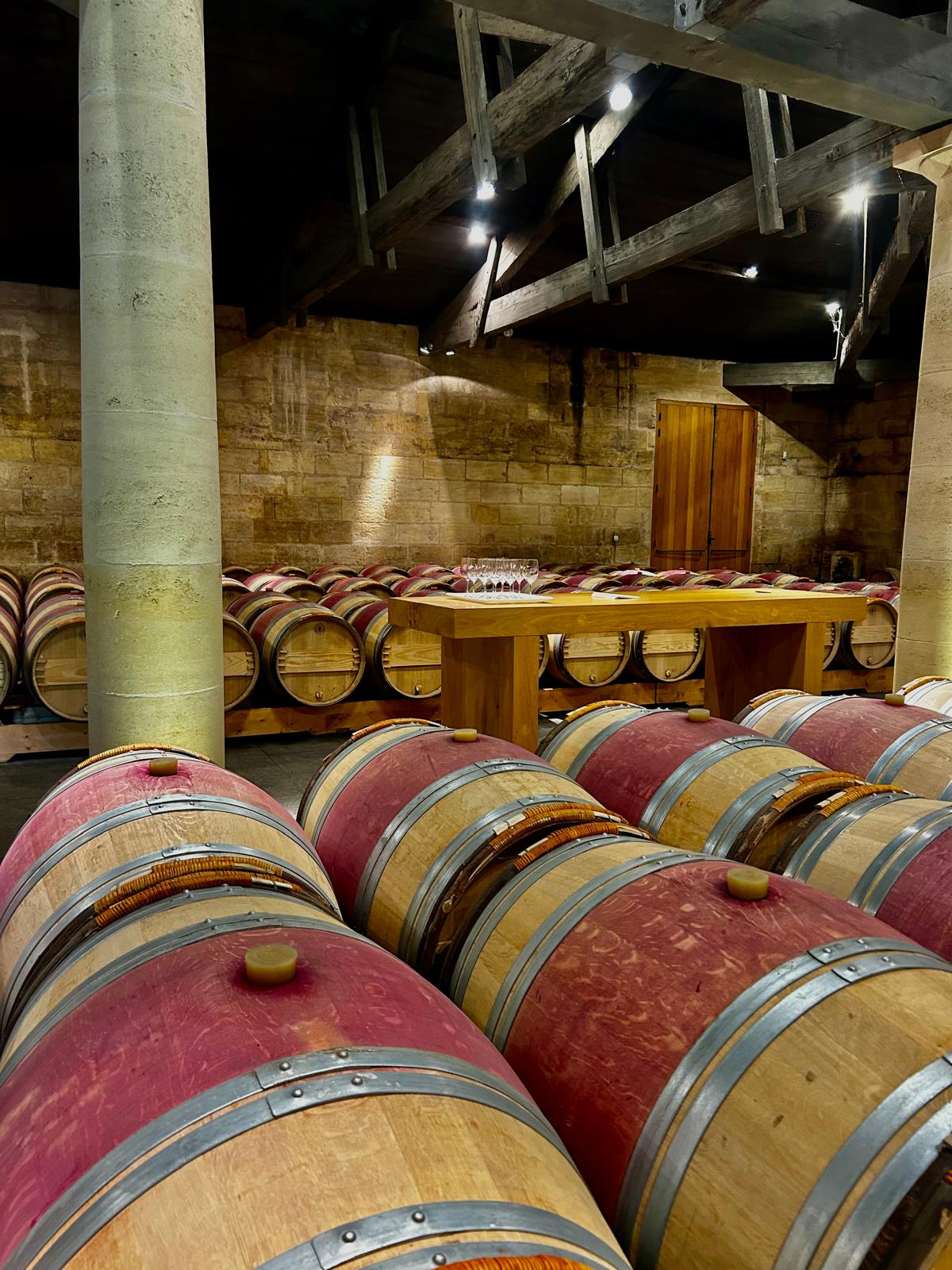
Palmer’s Petit Verdots are planted in equal parts on two sites with distinct soils, one made up of clayey gravels, suited to favouring the structure of the grand vin, while the other comprises sandier gravels and is destined for the second wine, Alter Ego, which finds there an interesting source for amplifying its aromatic register. Despite its clonal origin, this plant material gives complete satisfaction, being blended into an ecosystem that biodynamics allows to be maintained at its best, even helping to correct its excessively drooping habit. In addition, its resistance to downy mildew is all the more appreciated in this mode of management where the inputs to fight it are banned. The interest, and the constant attention paid to this variety, mean that Thomas Duroux willingly includes it in the grand vin at 4 to 6% depending on the vintage. It thus performs a decisive structuring function, acting as the “main beam of its framework”. In the composition of Alter Ego, the variety may even exceed this proportion in order to play a significant role in its aromatic expression, influencing it advantageously through its own scents evoking above all spices, like black pepper, and delicious black fruits like blueberry, as well as a floral note of violet.
Château Pédesclaux, an observatory of Petit Verdot
A Grand Cru Classé of Pauillac, Château Pédesclaux could claim to be a shrewd player acting for the cause of Petit Verdot, as its successive plantings show, the most recent of which, in 2017, was led by Félix Soulagnet, its vineyard manager. It is the fruit of a massal selection made from very old vines of a distant estate, located in the south of the Médoc, at Macau — Château Bolaire — whose terroir has made it a land of choice for Petit Verdot, which makes up almost half of its grape-variety mix. Chosen for the quality of its soil, gravels with a clayey subsoil, a small plot of the Pédesclaux vineyard was thus delimited to receive plants selected with great rigour from this source. Benefiting from the same cultivation principles as the dominant varieties, and notably organic management, this vineyard was moreover planted so as to showcase its genetic diversity, keeping the traceability of each graft. It remained experimental until the 2025 harvest, when its output alone went into the composition of the grand vin. It is in fact the other Petit Verdots of the vineyard, spread over two distinct plots, that have provided its contribution until now. Though very marginal — around 3% on average — the share of Petit Verdot forms the “salt and pepper” of Château Pédesclaux, in a percentage varying with the vintages, but almost never absent from its blend, except before 2015. As for the second wine, Fleur de Pédesclaux, the share of the variety is more substantial there, but also variable from year to year, with a peak of 14% in 2023. In this cuvée its role is obviously increased in order to accentuate the amiable side of its style, adding velvetiness to a texture already shaped by abundant Merlot, albeit decreasing in the most recent vintages.
100% Petit Verdot!
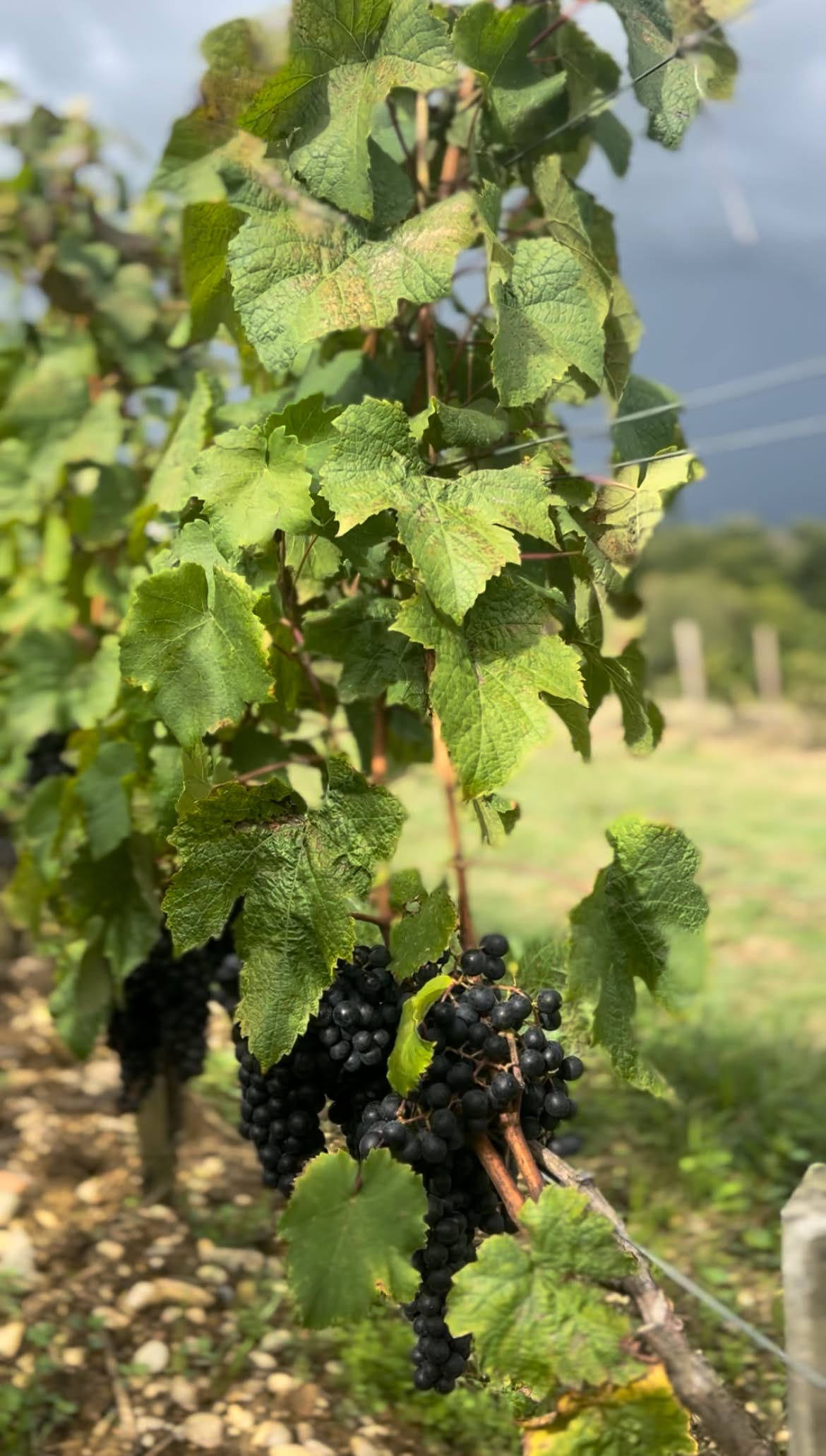
The conditions that have encouraged the growth of its plantings over the last twenty years and the convincing wines it has produced have naturally led to the making of wines exclusively from Petit Verdot. Moreover, the fact that its use is not capped in most Bordeaux AOCs has not been a brake on these initiatives. Although very rare and of confidential production, these carefully made cuvées have the merit of demonstrating its aptitude for giving flawless expressions of excellent standard. Among the few forming this category, those presented below are convincing examples.
It is hardly surprising that the name of all these wines names the variety, with the exception of Château Moutte Blanc’s, which bears the name of the plot where it has grown for a century! Located in the “golden triangle” of Petit Verdot, at Macau, this property presents many singularities in this respect, and above all a palus terroir, in other words clays and silts, from which the fruit of its Moisin cuvée is born, a pioneer of the genre since it has been made since the 1994 vintage. Tended in every respect and patiently aged in oak barrels, new and recent, it embodies an ambitious expression of Petit Verdot, even if it is simply labelled Bordeaux Supérieur. The same care characterises the making of the Petit Verdot of Château Pontoise-Cabarrus, in the Haut-Médoc area whose label it takes. Its location at Saint-Seurin-de-Cadourne supports Éric Boissenot’s remark that it succeeds where it feels at home, in this case on deep clayey gravels. A contrario with the previous one, here the vines are relatively young, around 15 years old, and of clonal origin, which does not prevent them from expressively rendering the advantageous characters of the variety.
More unexpected is the pure Petit Verdot wine of Château Reynon, planted outside the Médoc on slopes of the Cadillac Côtes de Bordeaux appellation. The initiative is due to the late Denis Dubourdieu, a highly esteemed oenologist who, in 2005, planted it on deep clays, well suited to the nature of the variety because of their water retention. Representing 10% of the total grape-variety mix, or about 3 ha, this legacy is now in the hands of his son Jean-Jacques, who makes substantial use of it in the estate’s flagship wine, at 15% of its blend, thus ensuring “a good reserve of colour and acidity”. When the year permits, the best of the Petit Verdots gives rise to a special cuvée, honouring his father’s memory, aptly named “Hommage à Denis Dubourdieu”. This rare wine receives every attention in its making and prompts its maker to speak of the appeal it holds, referring to an “enveloping, velvety, creamy palate” that happily keeps its tannic framework in check.
Mohamed Boudellal