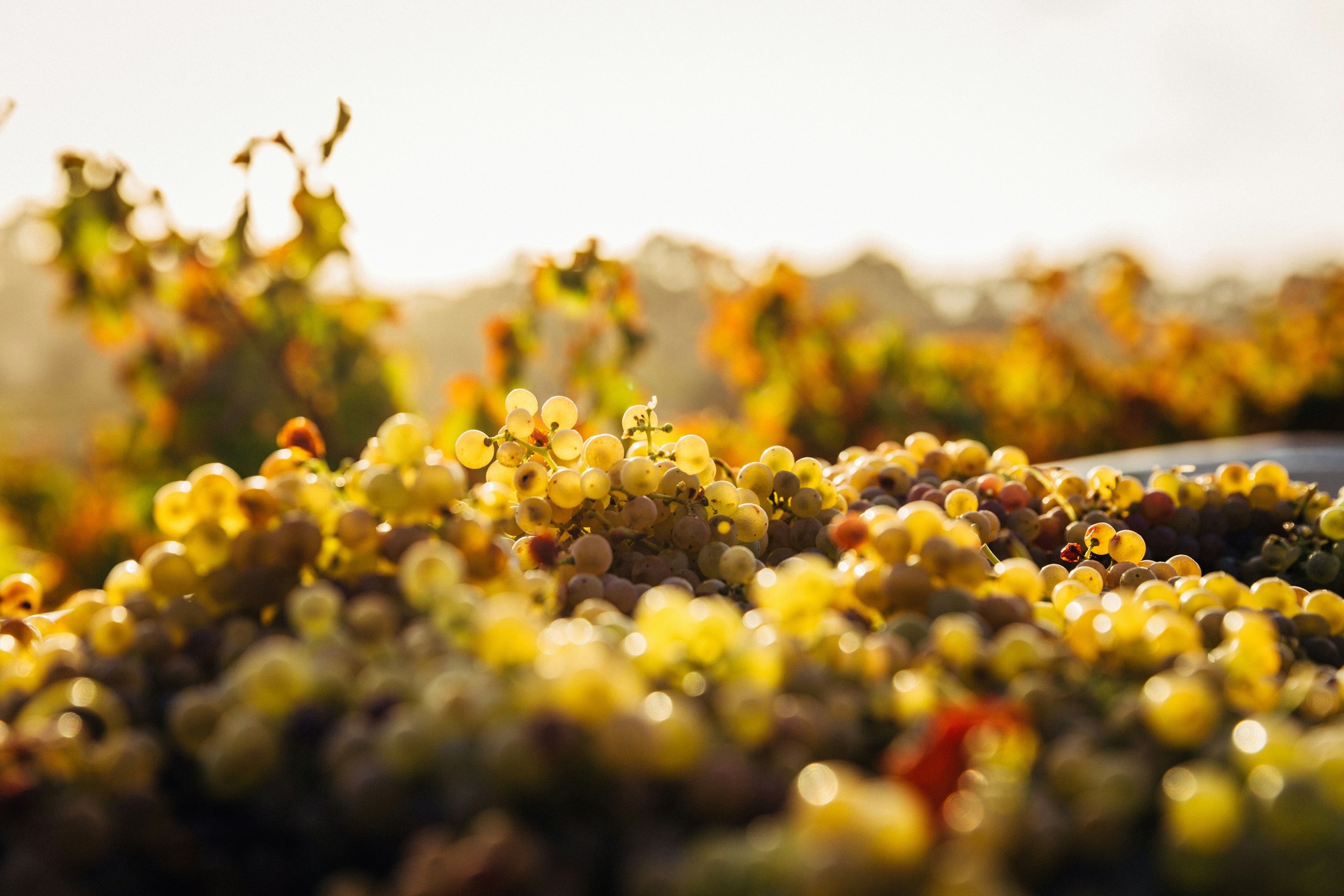
We have experienced in 2026 an exceptional climatic year, combining low rainfall and very high temperatures. The weather of this vintage has been compared to that of 1976, which the French remember because of the famous “drought tax”. The comparison is not very relevant: in that year, the Bordeaux region was in fact little affected by drought, and the July and August rainfall was even twice the normal level! As for temperatures, they were in line with the 1991-2020 thirty-year average.
The most interesting comparison is with 2003. In both cases, the drought period set in from March and lasted until the end of September. In 2003, cumulative rainfall from March to September came to 292 mm, against 379 mm in 2026, for a thirty-year average of 467 mm. The current year is 19% below normal in rainfall, whereas in 2003 this figure fell to 37%, or double. In the opposite direction, the heatwave was twice as marked in 2026. Indeed, if one adds up the deviations of the maximum monthly temperatures of June, July and August from the norm, one obtains +8.9 °C for 2003 against +16.6 °C for 2026. From the point of view of temperatures, 2003 should rather be compared with 2025, whose index is very close, at +8.7 °C.
The higher the temperature, the greater the vine’s water needs to provide the evapotranspiration necessary for its resistance to heat. In 2003, but above all in 2026, these needs were very high. At the same time, in 2026 but above all in 2003, soil water reserves at the end of the season were very low. The great red-wine terroirs provide the vineyard, even in small years, with a very limiting water supply. The less noble terroirs, which ordinarily give the plant a not very limiting water supply, move, in great vintages, towards limiting conditions. In the two vintages mentioned, 2003 and 2026, they too come to experience very restrictive conditions, then approaching the balance of the great terroirs. Old Médoc hands drew the following conclusion: buy the crus bourgeois in the great vintages and the classified growths in the small vintages. We therefore interviewed a few reputed oenologists to explore the question further.
Since the year produced small berries, sometimes with thick skins, the Médoc oenologist Antoine Médeville advised his clients to ferment the reds at very reasonable temperatures and to stop pumping over below a density of 1030, that is, when there is still 4° of alcohol left to ferment. Despite this, a significant number of vats exceeded 100 TPI (tannins), which is considerable. He readily compares these wines to the superb 2022 vintage, with the difference that he finds the Médoc Merlots, all terroirs combined, a little behind the Cabernet Sauvignons, Cabernet Francs and Petit Verdots, which was not the case in 2022. These three varieties are superb whatever the terroir, including on soils that usually give juices of average quality. As for quantities, these seem low to him, though slightly higher than last year’s.
Compared with the 2003 vintage, which we have likened to 2026 in climatic terms, he judges the quality overall better, with higher acidity that brings more freshness to the wines.