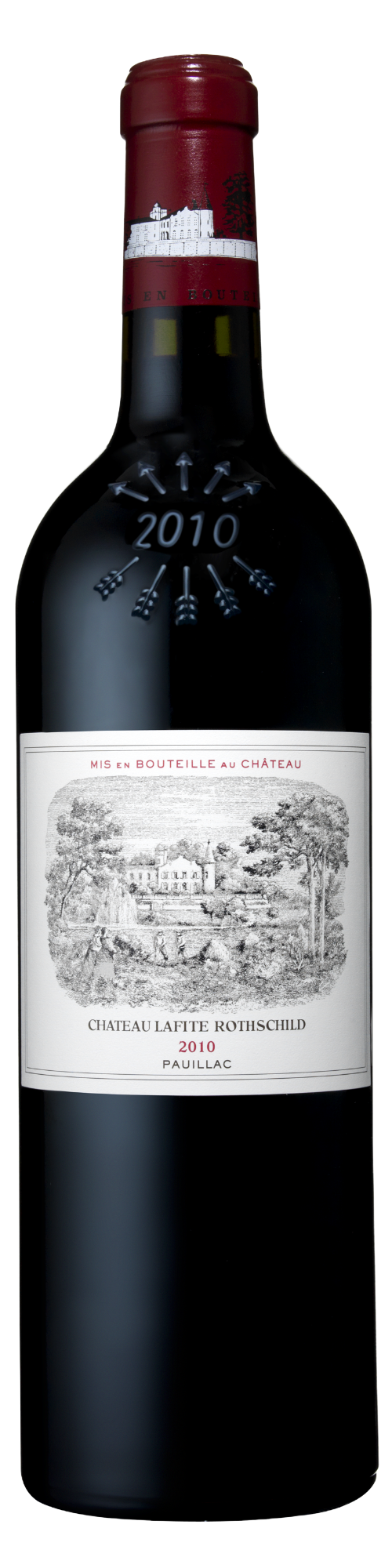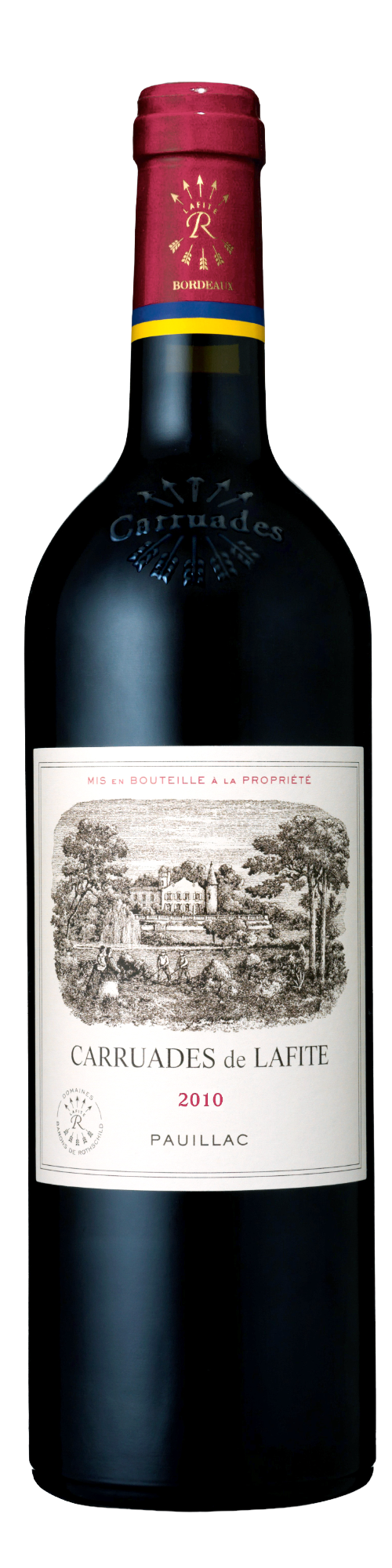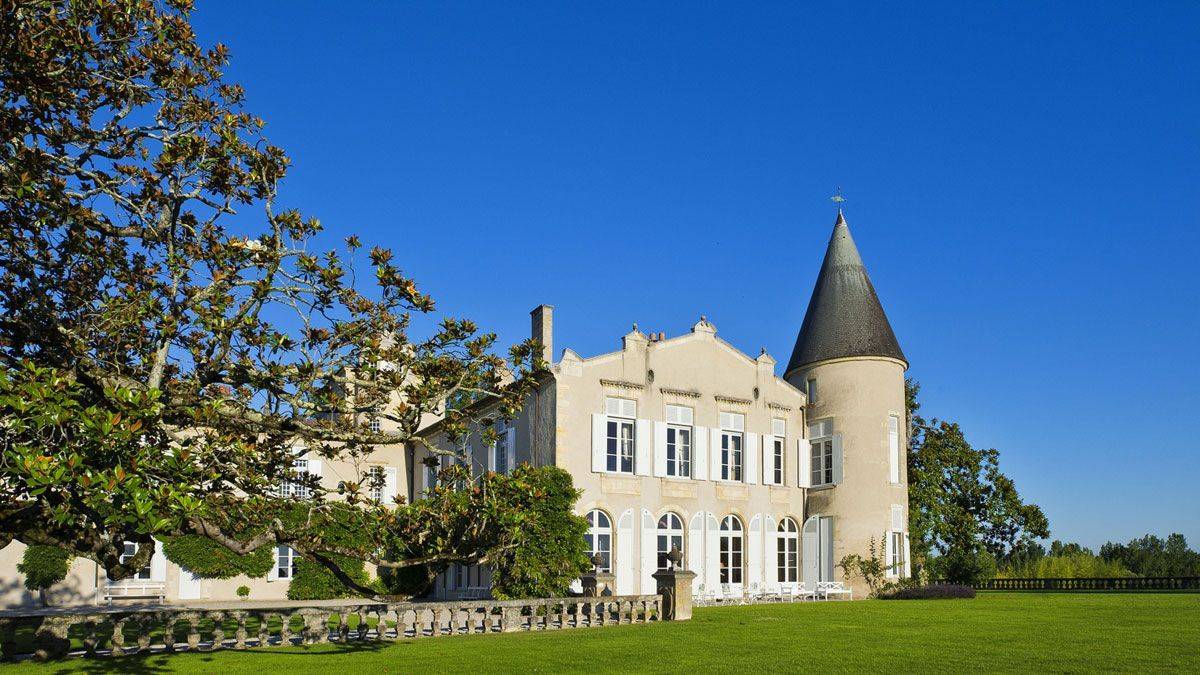
The Lafite growth has distant origins and a very ancient renown. It occupies the finest gravel rises of Pauillac, a territory already mentioned by the poet Ausonius around the year 325 of our era, in one of his Epistles to Theon:
“Pauliacus, tanti non mihi villa foret… ” (Epit. VIth).
Throughout the Middle Ages, and until 1789, the lords of Lafite held high justice over the region.
The existence of Lafite as a medieval lordship is attested from the 14th century. The name Lafite comes from the Gascon “la hite”, meaning the hillock. With the Ségur family, in the 17th century, the vineyard took shape and the reputation of Lafite as a great wine estate was established. Jacques de Ségur was behind the planting of the Lafite vineyard, around 1670 and in the early 1680s. In 1695, his son Alexandre married the heiress of Château Latour, and this union gave rise to Nicolas-Alexandre de Ségur.
From 1716, Marquis Nicolas Alexandre de Ségur set about consolidating the first successes, improving winemaking techniques and above all promoting the prestige of the great wines on foreign markets and at the court of Versailles. He earned the nickname “Prince of the Vines” and Lafite wine the title “Wine of the King”, with the support of a choice ambassador, Maréchal de Richelieu.
The Marquis had no son and his properties were divided among his four daughters. Lafite fell to Count Nicolas Marie Alexandre de Ségur, son of the Marquis’s eldest daughter. In 1785, the anonymous author of a memoir on the “Lordship of Lafite” spoke of the “finest vineyard in the Universe”.
On the eve of the Revolution, Lafite was already at the top of the wine hierarchy, as the exceptional writings of Thomas Jefferson, future President of the United States, then ambassador of the “young Republic” to the Court of Versailles, bear witness.
The Ségur family’s presence at the head of Lafite came to a very abrupt end with the execution of Nicolas Pierre de Pichard during the Terror, on 12 Messidor of Year II (30 June 1794). In the vestibule of Château Lafite hangs, framed, the very old poster announcing the auction of the property on 12 September 1797. The estate is then described as “the first growth of the Médoc, producing the finest wine of Bordeaux”. The buyer, Jean de Witt, a Dutch citizen, was soon forced to resell Lafite to three négociants who were also Dutch. From Jean de Witt’s brief tenure, Château Lafite gained a remarkable line of stewards, the first of whom, Joseph Goudal, held the reins of the estate firmly during the first part of the 19th century and throughout the 1855 classification.
In 1818, the new owner of Lafite was Barbe-Rosalie Lemaire, whose husband was Ignace-Joseph Vanlerberghe, a major grain merchant and important supplier to Napoleon’s armies. Aimé-Eugène Vanlerberghe, their son, in fact held Lafite until his death in 1866. It was discovered during his estate settlement that Samuel Scott, father and son, had only ever been his proxies and bankers.
On 8 August 1868, Baron James de Rothschild acquired Château Lafite, put up for public sale as part of the estate of Ignace-Joseph Vanlerberghe. Baron James, head of the French branch of the Rothschild family, died 3 months after the purchase, and Lafite became the joint property of his three sons: Alphonse, Gustave and Edmond. Whether to mark the change of owner or the euphoria of this prosperous period, the year 1868 remains memorable for Lafite in another respect, the exceptional price reached by the vintage. This en primeur quotation would remain a record for more than a century. Fortunately for Barons Alphonse, Gustave and Edmond de Rothschild, the “belle époque” of the Médoc continued for some fifteen years after the acquisition of Lafite. The trials of the late 19th and first half of the 20th century followed, but they were overcome and their heirs remain the owners of Lafite. The fifth generation of the family now heads the estate in the person of Baron Éric de Rothschild.
Baron Éric’s arrival at the helm in the late 1970s gave a new impetus through his commitment to the pursuit of excellence and the gradual establishment of a new technical team. In the vineyard, replanting and restoration work was accompanied by readjusted soil amendments and sustainable treatments. In the cellars, a stainless steel vat room was installed to complement the oak vats, and a new circular ageing cellar was built under the direction of the Catalan architect Ricardo Bofill. This revolutionary cellar, praised for its innovative character and pure aesthetic, can hold two thousand two hundred barrels. In the same spirit, in 1985 Baron Éric initiated an artistic programme associating Lafite with photographers including Jacques Henri Lartigue, Irving Penn, Robert Doisneau and Richard Avedon. He also broadened the estate’s horizons through new acquisitions in France and abroad.
The turn of the 21st century took place in serenity, given the great vintages ageing in the cellars and vaults.
The wines of Lafite, always produced with the same jealous care and the same constant pursuit of excellence, thus retain their unaltered reputation and continue to shine across the world, as they once did at the Court of Versailles.
Château Lafite Rothschild
Premier Grand Cru Classé en 1855
Pauillac