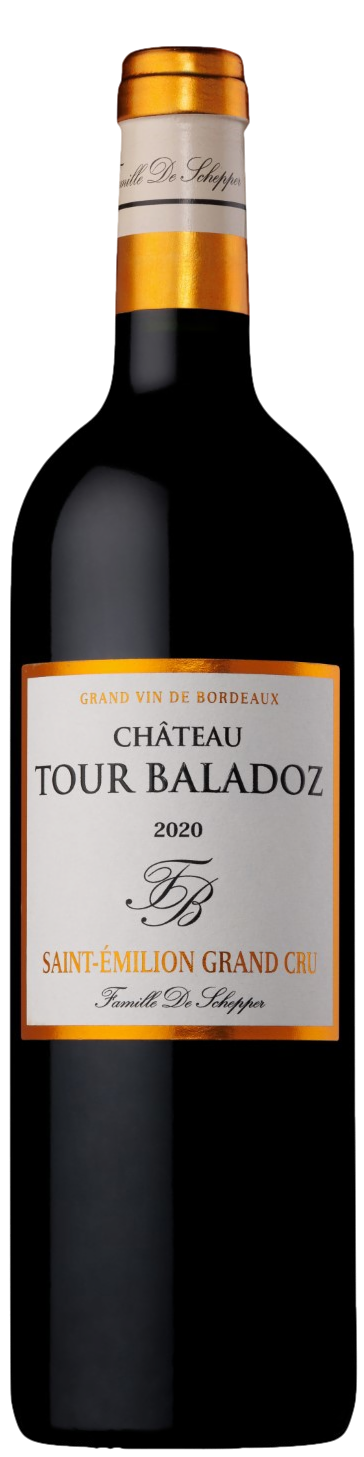
Château Tour Baladoz, located east of Saint-Émilion, in the commune of Saint-Laurent-des-Combes, has its origins in the 19th century. A notarial deed mentions, in 1874, the name Baladeau. Later, around 1896, the commune’s registers show the name “Baladoz” following a new decree.
In 1911, when the tower was built, the estate acquired its present name and became the property of the De Schepper-de Moor family in 1947.
The arrival of Émile de Schepper at Tour Baladoz was the result of a long search and many visits to the Bordeaux vineyards. Indeed, this important Belgian négociant had already understood at the time that owning a vineyard could add value to his Belgian business and distinguish him among his colleagues. An old dream thus came true in 1950. Saint-Émilion: is there a more authentic terroir? A landscape listed as a UNESCO World Heritage site, a wine-growing past stretching back a thousand years! Tour Baladoz lies in this land of choice and is surrounded by prestigious neighbours such as Château Pavie, Troplong Mondot, La Mondotte, Tertre-Rotebœuf etc.
The 8-hectare vineyard, located on one of the highest points of the region, offering a superb panoramic view from its terraces, is planted with the traditional grape varieties: 75% Merlot, 20% Cabernet Franc and 5% Cabernet Sauvignon.
After vinification and 12 months of ageing, each vintage is bottled at the château. The average annual production is 51,000 bottles.
The terroir, the grape varieties and the quality contribute to the dignity of this Saint-Émilion Grand Cru.
Over the years, and strengthened by this first success, Émile and his sons acquired other estates: Château Haut Breton Larigaudière in Soussans / Margaux, Château Tayet in Macau in Bordeaux Supérieur, Château La Croizille, another Saint-Émilion Grand Cru, and Château Lacombe Cadiot in Ludon in Bordeaux Supérieur.
The wines of Château Tour Baladoz are particularly appreciated by the Royal House of Belgium and it bears the title “Supplier to the Royal Court of Belgium”.
Château Tour Baladoz
Saint-Émilion Grand Cru • 9 HA