Laujac designates an ancient place that most certainly has its origin in the Roman conquest of Gaul. Names ending in ” ac ” are indeed most often used in the Gironde to designate a Gallo-Roman villa. Indeed, while digging the foundations of a vat room, labourers discovered in the 19th century fragments of mosaic, polished axes and also flints and pottery, which suggest an even earlier human presence.
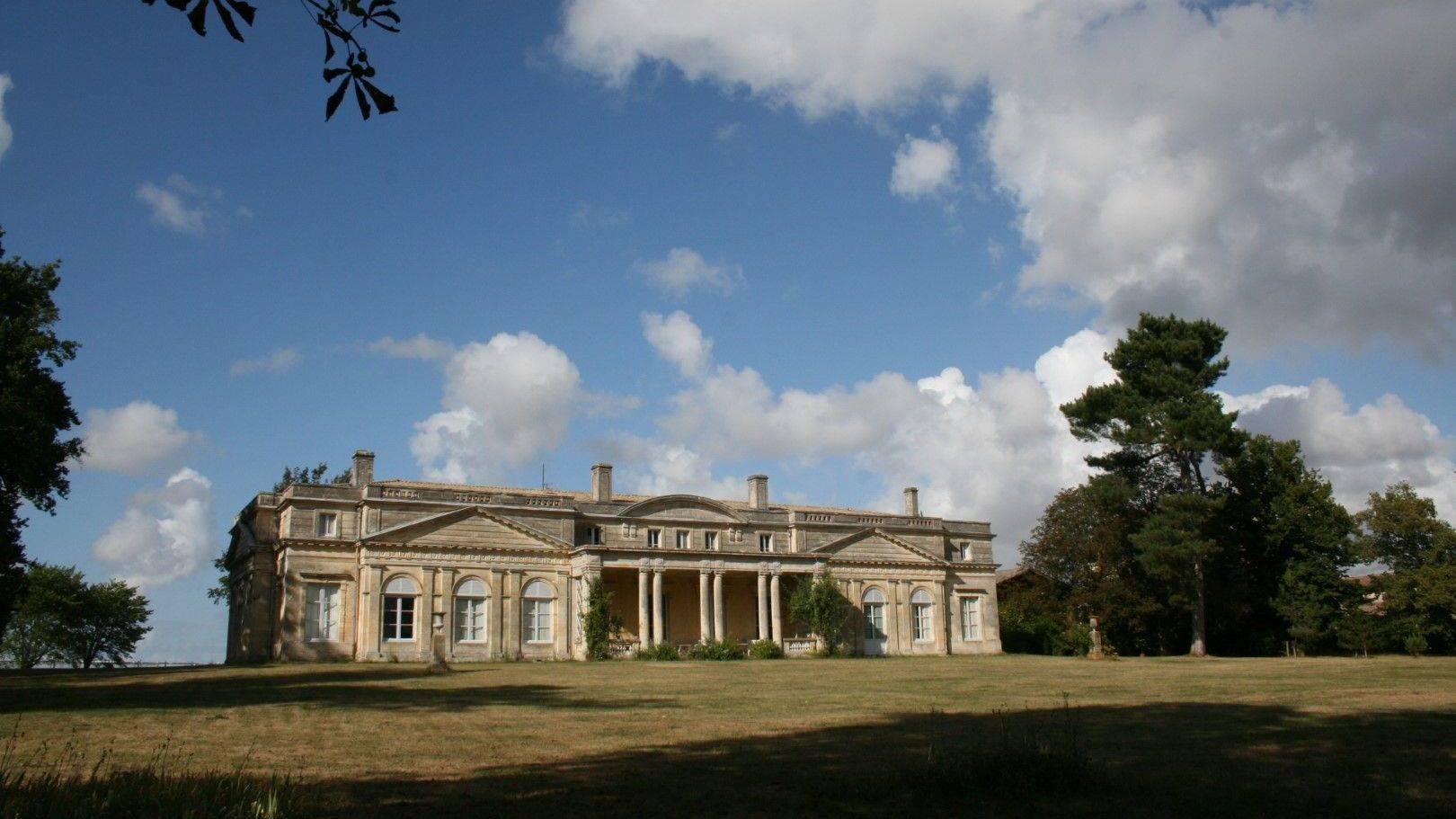
In the 17th century, Laujac belonged to the d’Aujeard family. Négociants by trade, they rose, thanks to Colbert’s favour, to the nobility of the robe. They kept Laujac during the Revolution and it was only at the dawn of the 19th century that Monsieur and Madame de Villeminot (Madame was born de Sèze) acquired the estate. They had the residence built around 1810. Château Laujac is a fine example of neo-classical architecture inspired by Palladian villas.
The vineyard and wines of Laujac were already renowned; A. Jullien in 1816, in his ” Topographie de tous les vignobles connus “, compared them to those of Pauillac.
In 1824, the de Villeminots sold the estate to the Cabarrus family, négociants and shipowners in Bordeaux, cousins of Notre Dame de Thermidor. ” Le Producteur “, in its 1939 journal, noted the excellence of the Laujac wines of Adrien Cabarrus.
Herman Cruse acquired it in 1852. Founder of the house of Cruse & Fils Frères, he bought his first vineyard on the strength of its reputation. Laujac, which remained in the same family until the present day, is thus the oldest of the Cruse family’s vineyards. As the 1868 edition testifies, Herman Cruse distinguished from the very start of his ownership the two great terroirs of the property. Thus were born the wines of Château Laujac and those of Château Laffitte-Laujac (see below, in the same commune). Several classified growths of the Médoc would later join the family holdings. The Cruses entrusted the management of the estate to Théophile Skawinski in 1862. Like the Crus Classés managed by his father (Pierre Skawinski), Laujac benefited from sumptuous investment. T. Skawinski had the imposing and, for the time, incredibly modern cellars built, completed in 1875.
At the end of the 19th century Laujac was an exemplary farming estate and a veritable village. In addition to its superb facilities, the perfectly self-sufficient property even included a school and nursery for the children of the estate’s employees.
A century later, in 1962, Bernard Cruse, a passionate agronomist, took over the running of the estate. Between the family négociant business and the property, his attachment to nature made him choose the latter without hesitation. The estate came through the difficult periods of the early 20th century partly thanks to the diversity of its activities, between livestock farming (which continues to this day) and wine production. This balance suits him perfectly.
Thus in the 21st century, Laujac remains this wonderful estate of 400 hectares that has managed to preserve the excellence of its wines, sought after on all four continents.
In 2012, Vanessa Cruse-Dubosq joined her father to take the reins of this fine estate. A representative of the 6th generation, she continues in this line to meet the challenges of our time.
Château Laujac
Médoc • 350 HA