A renowned hunting lodge under Louis XIV, the vineyard developed particularly under the influence of the Coutanceau family, the name under which the estate’s wines were first listed in the classification of Bordeaux wines drawn up by Guillaume Lawton in 1815. The name “Bellegrave” appeared in 1845, when Bruno Devès, a Bordeaux négociant, restructured the property, favouring the development of vines on the best gravel terroirs.
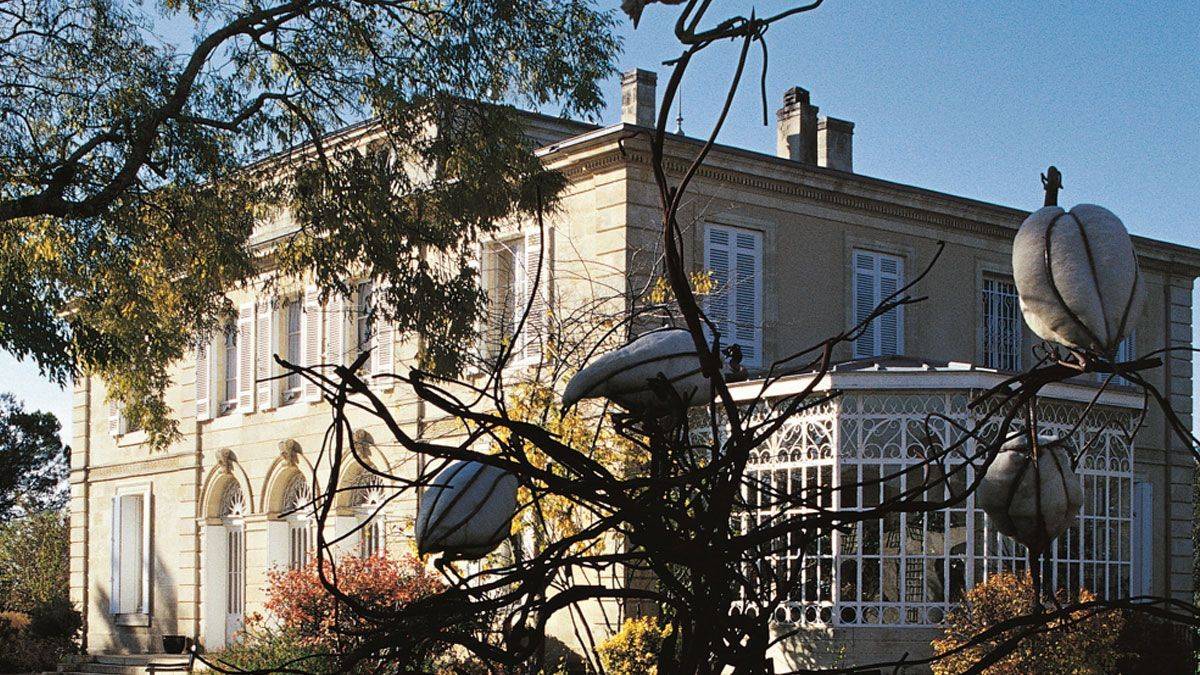
He built outbuildings, cellars and vat rooms, and had the present house erected on the site of the old hunting lodge. Classified a Fifth Growth in 1855, still under the name of Coutanceau, the name Belgrave was definitively taken up again at the beginning of the 20th century by Marcel Alibert, founder of the Crus Classés union and owner of the estate for nearly 30 years.
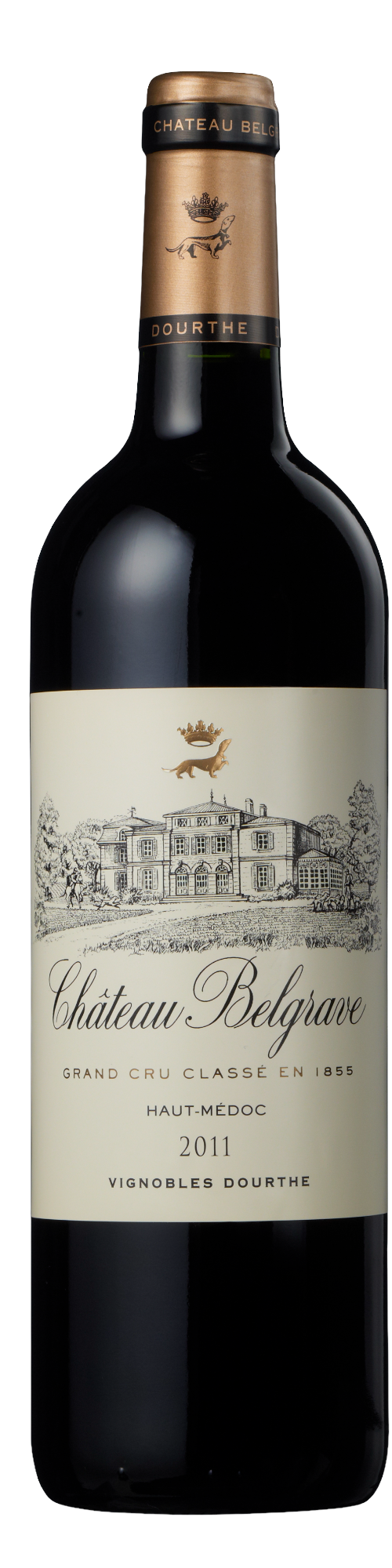
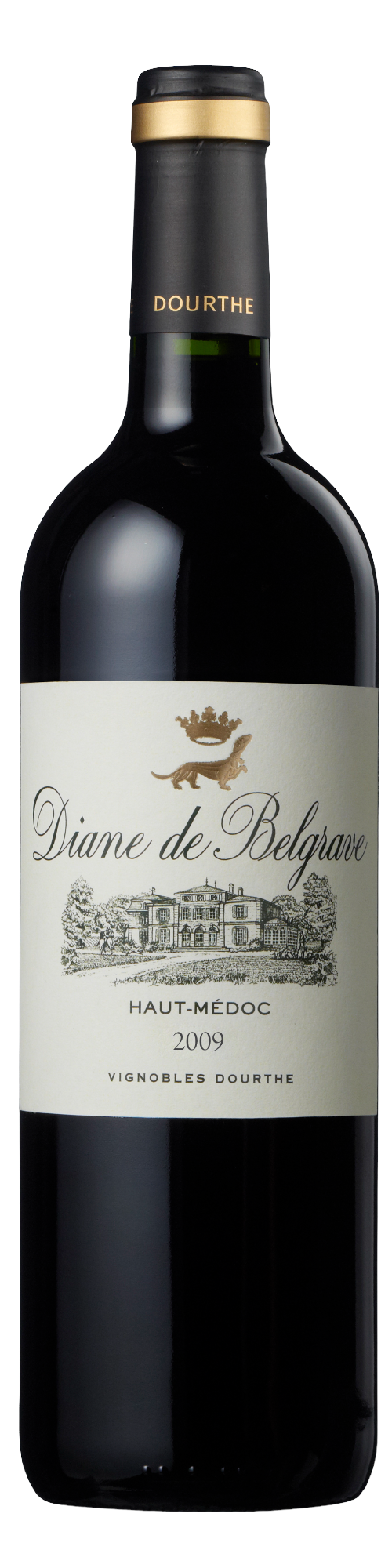
The link between the estate and hunting explains the presence of a ferret on the château’s wine labels and the name given to its second wine, created from the 1987 vintage: Diane de Belgrave.
Like many Médoc crus, Belgrave suffered greatly in the interwar period. By taking over Château Belgrave in 1979, Dourthe wagered on restoring to this Fifth Growth of the Haut-Médoc an allure and wines worthy of its rank. Much investment, energy and talent, but also patience, were required.
Located on the edge of the Saint-Julien appellation, neighbouring Château Lagrange from which it is separated only by a stream, Château Belgrave displays a remarkable diversity of soils. The two rises, which peak at 23 and 26 metres, are made up of gravel and pebbles deposited by the Garonne several thousand years ago, and rest on a deep clay substratum. These soils are particularly suited to the ripening of later varieties such as the Cabernets and Petit Verdot. The depth of gravel diminishes at the foot of the rises and gives way to free-draining gravel-sand soils, with outcrops of clay particularly suited to the cultivation of Merlot.
The vineyard, managed according to the environmental principle of sustainable protection, benefits from meticulous vineyard work, adapted throughout the growing cycle to the climatic conditions and to the nature of each plot or micro-plot identified thanks to a rigorous soil study. Thus, a perfect knowledge of the vineyard allows staggered intra-plot harvests of healthy grapes of the same ripeness, in order to make perfectly homogeneous vats.
The large vat room was entirely redesigned in 2004, making it possible to respect the character and diversity of the lots resulting from the plot-by-plot harvest: it comprises 37 stainless steel vats of various capacities, 14 of them equipped with a punching-down system. Seven small-volume, truncated-cone stainless steel vats were installed in 2012 and 2013 in order to refine the intra-plot selection even further.
In 2007, the renovation of the semi-underground ageing cellar in a resolutely modern style continued a 15-year cycle of rehabilitation of the vineyard and cellars of Château Belgrave; then in 2010 it was the turn of the large reception room to be renovated in a sober, luminous style, offering our visitors the best tasting conditions.
The wines of Château Belgrave are deep wines distinguished by their ageing potential and aromatic complexity. With a less dense structure than its elder, Diane de Belgrave is a well-balanced wine with lovely fruit aromas and supple tannins.
Château Belgrave
Cinquième Grand Cru Classé en 1855
Haut-Médoc • 76 HA