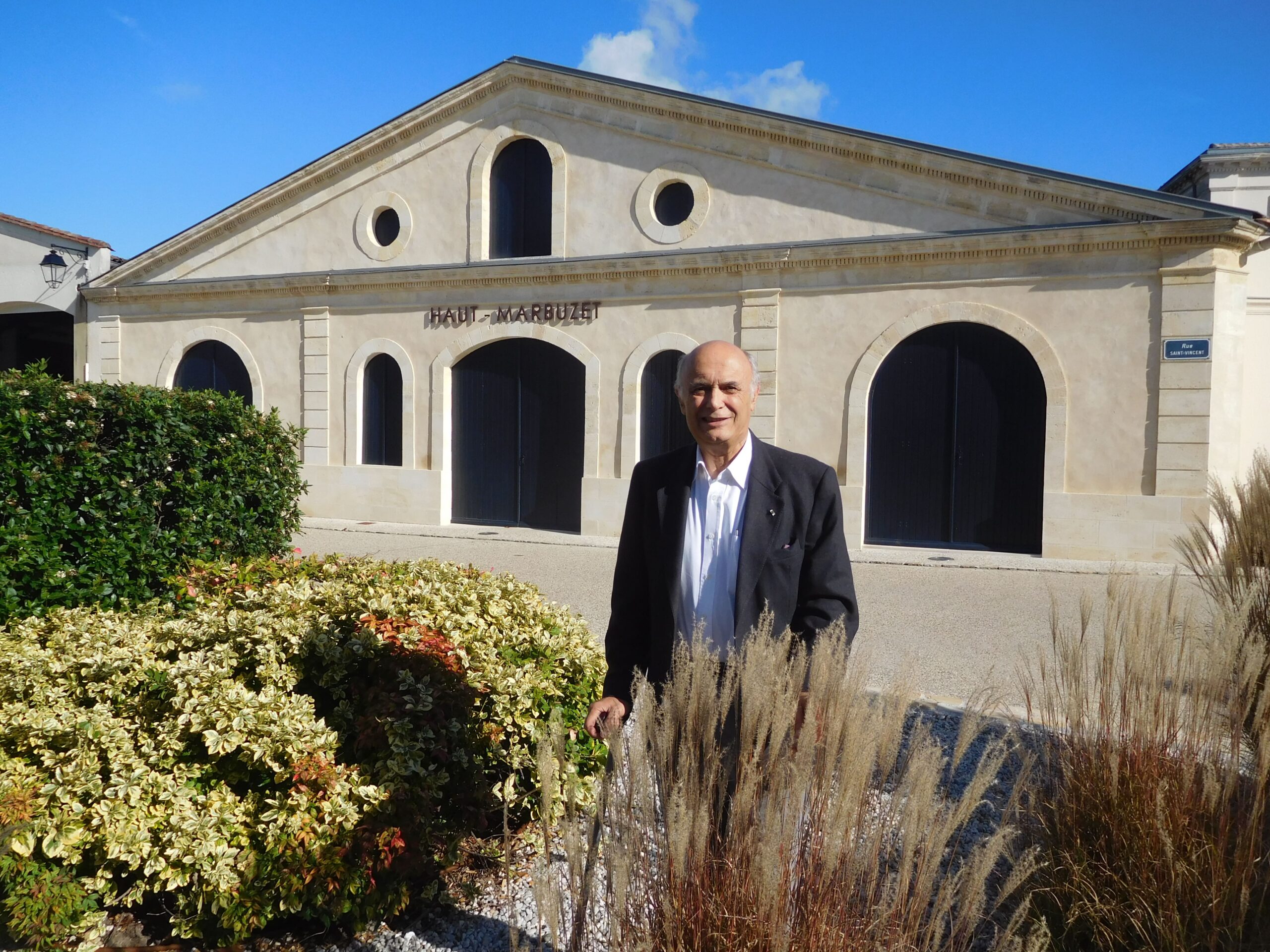
Yves Raymond, a winegrower with a thousand lives, was a food journalist, a freelancer for Gault et Millau and a travelling companion of Jean-Pierre Gauffre at the Journal du Médoc. This emblematic figure of the Bordeaux wine landscape is a keen connoisseur of the Médoc and of its centuries-old history. He looks back for Féret at what prevailed in the (forthcoming) creation of a Médoc blanc AOP and at the evidential importance of Bordeaux et ses Vins.
Before about 1895, the only whites recorded in the Médoc came from the villages of Blanquefort and Le Taillan. They were then sold as Graves wines! This was possible because these two villages were on the boundary separating the Médoc from Graves. The 18th century saw the birth of modern wines, that is, wines able to get through their first summer without deteriorating. Before that, it must be said, all French wines were drunk over the winter, like Beaujolais nouveau, because they turned sharp when the warm season arrived. At the end of the 17th century, the concurrent discoveries of the sulphur wick, the beginnings of the industrialisation of bottle manufacture (at lower cost) and cork stoppering made possible the birth of wines as we know them today.
The 18th century also corresponds to the Médoc’s double triumph, that of red wine over white and that of the Médoc over all other Bordeaux regions. At that time, Graves extended as far as Blanquefort and Le Taillan. The Médoc’s commercial triumph prompted growers in these communes to claim the name of the neighbouring region. This is what Blanquefort and Le Taillan managed to do at the end of the 18th century, while taking advantage of the absence of any regulation or higher authority to keep nonetheless their white production as… Graves, as André Jullien specifies in his Topographie de tous les vignobles connus, published in 1816. The idea was to win on all counts: to benefit from the strong demand and high prices reserved for Médoc reds while enjoying, for the whites, the fine reputation of Graves. Almost all the white vines of the two communes were to be pulled up around 1850 because consumers abandoned dry white wines in favour of Sauternes and other sweet wines, as the 1868 Féret would relate a few years later. The Médoc white vineyard came back to life from 1895 and this time concerned all the communes of the peninsula up to and including the most famous red-wine-producing communes such as Margaux. The various editions of Bordeaux et ses vins allow us to document the growth of this vineyard decade after decade. In 1905 the laws on simple appellations were enacted. The various villages opted for Médoc appellations, except the wines of Blanquefort and Le Taillan, which retained the designation Graves wine. These simple appellations were definitively abolished around 1960 in favour of the AOCs, and all Médoc white production had to fall back on the Bordeaux appellation, which came close to causing their total disappearance. Here again, the documentation provided by the Féret is irreplaceable and allows us to quantify this collapse. The craze for Médoc reds was such at the time that no wine-growers’ union came forward to request the creation of a white appellation d’origine contrôlée. But little by little, from the 1980s, interest in white revived, to the point that today more than 70 châteaux produce white in the Médoc and the movement is accelerating.
Today we are in a reversal, with growing demand for whites and a fall in the consumption of reds. The choice of a Médoc blanc appellation is therefore also dictated by the market. That cannot be denied. I would add, though it will have been noted, that we relied heavily on the Féret guide to support and legitimise the file before the INAO. One can never pay enough tribute to the paramount importance of Bordeaux et ses vins in tracing the history, the turnarounds and trends of the Bordeaux vineyard from 1850.
As told to Henry Clemens
(1) Yves Raymond’s articles on the history of Médoc white wines can be found in the Cahiers Médulliens, a publication of the Société archéologique et historique du Médoc.
(2) An article documenting the shift of Blanquefort and Le Taillan from the Graves region to the Médoc region will appear at the end of the year.