From winegrower to INNO’VIN, what are the main stages of your career?
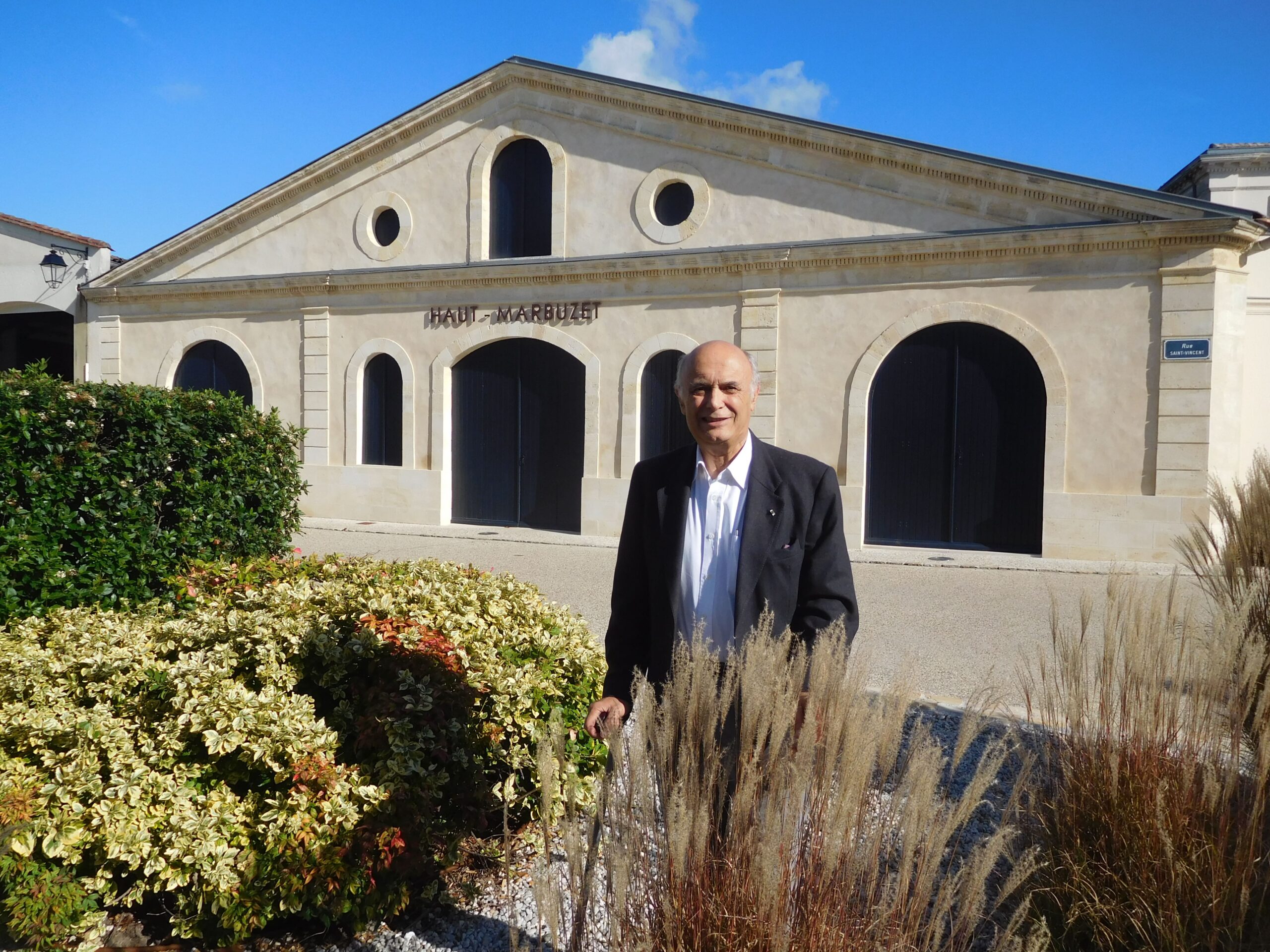
I was born in Bordeaux to parents from Charente-Maritime and the Vendée. I studied here: Sciences Po Bordeaux and a postgraduate degree in management control and internal audit at the IAE de Bordeaux. At the end, I left for Paris to work at UAP, which merged with AXA. With my wife, I very soon nurtured the plan of returning to the South-West. It so happens that in 1986 my father had bought a wine estate in the Premières Côtes de Bordeaux and in 1997 he offered me the chance to take over the property. I told myself it was now or never, but without the slightest knowledge of the sector and the trade.
Between 1997 and 2010, I was a full-time winegrower and looked after this property of about thirty hectares. In 1999, I took the DUAD. During this period I also got involved in the Premières Côtes wine union as treasurer and vice-president. I was also involved in the Union des Côtes de Bordeaux, setting up the territorial project of the Côtes de Bordeaux appellations. I rubbed shoulders with the industry from the inside. For personal and economic reasons, I decided to change course. Completely by chance, I applied as director of the INNO’VIN cluster. In 2010, I arrived at the head of this small association, located in the premises of the ISVV, which had 16 founding members and a budget of 90,000 euros for 18 months, allocated by the Aquitaine regional council.

How does INNO’VIN respond to the industry’s current needs?
INNO’VIN is an extremely agile structure that feeds on the needs and strategies of the industry. As such, we evolve according to its objectives. While we are in a complicated context that affects innovation projects, which require looking 4 to 5 years ahead, which seems difficult in the current context, I remain convinced that businesses need innovation all the more in this situation. A context that calls for questioning ourselves, going out to find new markets, adapting to new production conditions, pooling efforts… For our part, we must refocus on our core activity, be even closer to the needs of the industry, of our members and of businesses. INNO’VIN must gain in visibility and recognition.
We want to create an INNO’VIN reflex in responding to the challenges. We are admittedly only one link in a complex chain, and the projects we support are first and foremost the businesses’ own projects, but we must not forget that INNO’VIN was at one point the necessary and important link in the project. Since its creation, INNO’VIN has supported nearly 200 projects, corresponding more or less to 50 million in R&D investment over a little more than 10 years!
How do you support projects in the wine industry?
Innovation projects arrive through different channels. The case we would like to encounter most often is a company head, an R&D manager, etc. who comes to see us and tells us “I would like to develop a new solution”. They will then ask for academic partners, research laboratories, tests of their product, ask for users (winegrowers), funding, advice on intellectual property… This situation is becoming less and less frequent.
Projects also come from research laboratories. In that case, we will for example be contacted to support doctoral theses and to transfer the research results of these theses to businesses. Projects also come from working groups that we set up around current issues and challenges, which can lead to collective actions and projects.
How is INNO’VIN funded?
We are a small team, but it goes without saying that to do this work of detection and animation of our network, and to get ideas germinating, the structure has to be paid for. Our 170 members fund us at a level of 50 to
60%. They are very small businesses, SMEs, large groups, start-ups, suppliers, nurserymen, etc. We also have a number of paid services that we can offer on technology watch, participation in trade fairs, international missions, etc.
Finally, we also rely on public revenue from the regional council, which is one of the structures at the origin of the project, from Bordeaux Métropole and Grand Cognac, not to mention possible European aid on specific projects. As for project funding, public innovation funding is sought. But I want to make clear, and it is important, that these are co-financings. Every time the State puts in one euro, the company puts in one euro!
INNO’VIN is unique in France, in Europe…
Yes. As for clusters, the competitiveness clusters that do roughly the same job as we do, there are hundreds of them, but we are very few, even the only ones, to be focused on the wine industry. At European level too, to the point that we created the association WICA (Wine Innovation Collaboration Alliance), which brings together structures close to ours to work on innovations in the wine world, make them known and exchange good practices with the major wine players worldwide.
Is the INNO’VIN of 2010 different from today’s?
Yes and no, because we have grown, we have more members and our missions have broadened a little, but the raison d’être of INNO’VIN, the one that presided over its creation, remains the same: to respond to the industry’s major challenges through innovation, an industry that is essential in terms of employment, regional planning, trade balance, etc. If we want this industry to remain a leader and competitive, it must respond to major challenges that we all know: climate change, pesticide reduction, decarbonisation, adapting the product to consumers’ tastes… To meet these challenges, winegrowers and négociants need, and will need, innovation.
INNO’VIN is here so that innovative solutions and new services are available to them to meet the new challenges. So, if we want to reduce pesticides, we will need bio-solutions, biocontrol products with no impact on human health that are nevertheless effective against diseases. These products must be imagined, developed, designed or marketed by companies, with research laboratories that help these companies to develop new molecules and run trials, and winegrowers who test them… INNO’VIN supports these projects so that they germinate, are adapted to the need and are, tomorrow, available on the market. That has been our role since the structure was created.
What kind of partnership could INNO’VIN envisage with Féret?
Innovation can certainly feed publishing projects. But perhaps one day Féret will need innovation around the guarantee of the wine information on which professionals rely, which a blockchain could certify. A collaboration with INNO’VIN is therefore not to be ruled out.
You can also be a sounding board for us with workshops and conferences in order to bring innovations down to the industry and bring expressions of need back up. It seems to me that animating the network makes sense for Féret.