Now an unmissable figure, inseparable from Vignobles Clément Fayat, the dynamic young woman looked back for La Lettre Féret on her career and on the necessary transformation she has overseen of the group’s wines, starting with the flagship, Château La Dominique.

Can you introduce yourself?
I arrived in Bordeaux at the end of my wine studies at ESC Dijon, CIVS Master’s, 15 years ago. I am originally from Burgundy. My vision of Bordeaux at the time was very hazy. I did not understand how it worked, between the négoce, the brokers and en primeur. I was very keen to get close to this world in order to understand it better. That is why I did my end-of-studies internship at the CVBG, in the export department. I admit that I then discovered a world and a system that never cease to amaze me, between the history of the vineyard and the worldwide renown of the grands crus. A passion and an interest that have never wavered, which is why I stayed in Bordeaux.
Any regrets about settling in the Gironde?
None; life is very gentle here when I compare it with life in Burgundy, its climate in particular. I say that, but I add straight away that I remain very, very attached to Burgundy wines. Those who see me, even a little, know my love of Chablis in particular. (laughs)
How did you come to join this family group?
The managing director at the time, whom I had met through my activities at the CVBG, introduced me to Messrs Clément Fayat and Jean-Claude Fayat so that I could assist him in his export duties. We got on well and the adventure with this family, so attached to this wine heritage, could begin. The post evolved in that in 2017 the family entrusted me with the general management of the three properties: Château Clément-Pichon, Château Fayat and Château La Dominique, from three different appellations on the Left and Right Banks.
If you had to describe these châteaux?
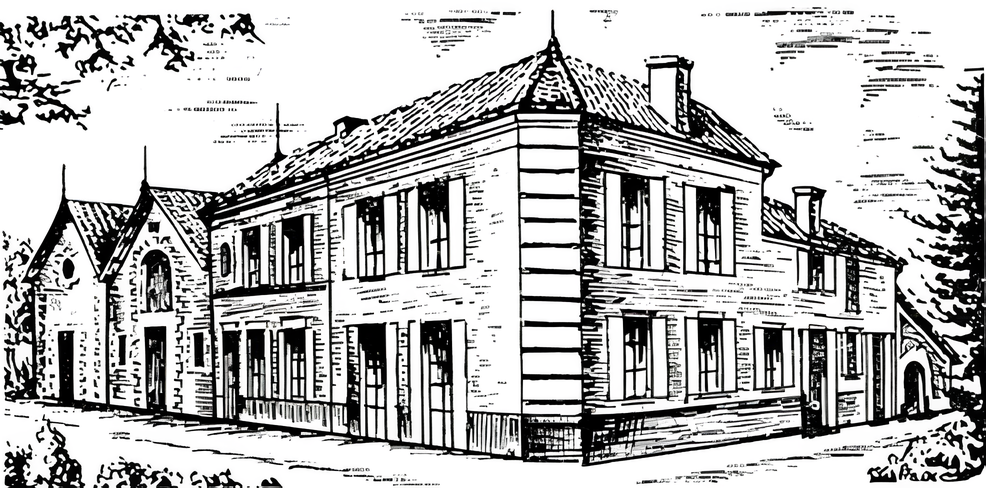
The powerful emblem of Clément-Pichon remains the family home, with an exceptional building. It appears on the label. It is a strong brand on the domestic market in particular, in great demand in the on-trade and in supermarkets. A château carried, it is true, by a label that is particularly popular in the Asian market. The “smallest” of the three but not the least interesting!
The other two are in prestigious appellations
Yes, Château Fayat, located in Pomerol, benefits from a world-renowned AOP! For four years we have been running a major agroforestry project on this site, which we might call an urban vineyard, in very close collaboration with the Libourne community. It is a brand that now has a strong identity and is steadily making its way. I would add that since 2019 I have been supported by a technical director, Yann Monties, who oversees all the châteaux for which we had great ambitions. The effects were not long in coming, with tremendous results and ratings that have shot up for all of our wines.
Of the three, Château La Dominique is your flagship…
All the more so as it was the Fayat family’s first acquisition, in 1969. A property ideally located in Saint-Émilion on exemplary terroirs and surrounded by great neighbours. The wines have never been so good; as proof I offer the 2019, 2020 and 2022! Completely crazy vintages. Beyond that, Château La Dominique is one of the unmissable references in wine tourism. We opened our doors wide more than 10 years ago, when we were true pioneers. A unique offer, completed by La Terrasse Rouge, the restaurant perched on the roof of the property with a breathtaking view over our vines.
Does La Dominique’s new profile match expectations today?
Yes, and that is exactly where I was able to make my contribution. I should say that when I was appointed head of VCF, market expectations were already different. While I appreciate what makes the beauty and strength of Bordeaux, that is, its ability to age admirably, I don’t necessarily want to wait ten years to open a bottle. That was the whole issue when I recruited Yann and we sat down around a table to define the ambitions and objectives. I wanted us to make wines that are vibrant, fresh and drinkable in their youth, with fine ageing potential. We want to stop intellectualising our wines! They should be on our tables, drunk and enjoyed without people asking themselves too many questions. We have to get back to the essentials, that is, the hedonistic side of the approach. A philosophy applied, I should point out, to all three châteaux.
An aspect somewhat forgotten by Bordeaux?
Bordeaux has certainly taken a little time to adapt to these expectations and to redraw the profile of its wines. People have neither the time nor the space, I repeat myself, to wait indefinitely for a wine before they can enjoy it. We must be able to make wines that have structure, fruit and concentration. In doing so, we are not completely revising the Bordeaux codes, but simply making sure that our wines can also be drunk in their youth. It is a demand that is now widespread whatever the market, with the distinction sometimes made by age group, the under-35s clearly favouring fruit-driven wines.
Does Bordeaux have a lack of embodiment?
Yes, surely a little still. Above all I think we need to get people to taste our wines even more. Also to get back in touch with our consumers and understand their expectations.
How important is en primeur today?
I am always very happy to let people taste wines in the course of ageing, the fruit of our work. I admit — it is no scoop — that sales during this period are somewhat stalling. The idea remains brilliant but today concerns only a chosen few.