Can you introduce the Domaines de la Parrhèsia?
It is a family project run with my husband Guillaume. We lived in Canada, where my husband ran a group of retirement homes and I was director of the Fondation de l’école française in Montreal. The COVID episode gave us a real desire for change. We wanted to serve something more positive, while deciding to return to France to be closer to our respective families. That was when we finally decided to see through an old dream. We are both passionate about wine. We told ourselves that if we were going to reinvent ourselves, we might as well do it in a field we are passionate about. We both grew up in the Paris region, but my family produces Cognac and wine in Alsace. So I spent a large part of my childhood in the cellars and vines. My husband’s father owns vines in the Côtes de Provence, which Guillaume looks after today.

Why Bordeaux and Graves?
Out of taste! We looked all over France, and by studying the different French wine regions we realised that the Bordeaux region had a few climatic advantages. It seemed to us that it would be one of the regions least affected by climate change, drought, flooding or frost. Within Bordeaux, we had a strong preference for the Graves AOP. Wines that, to us, are quite identifiable, with fruit and a rather exemplary fineness of tannins.
Tell us about this project made up of two entities in Graves
We fell in love with Château Couloumey at the outset, but its 3 hectares of vines seemed to us hardly viable or profitable. We were missing 10 hectares, which is what Couloumey’s production facility was capable of vinifying. That was when our agents offered us Château Le Tuquet, but I can tell you that with 130 hectares of property, of which 40 hectares of vines, it was no longer the same project (laughs). We pulled up the poorer-quality vines. Today we are left with 27 hectares planted. For these two wine entities, we created a single operating company: the Domaines de la Parrhèsia.
What pitfalls did you not expect?
We have had to face, and still face, a major challenge in marketing Bordeaux wines. Many people still hold on to the image of dusty, old-fashioned wines. We constantly have to dismantle that image. We also have a major production challenge. We indeed have to completely restructure this vineyard, which is not going as fast as we would like.
What is your range?
Today we already have white, red and rosé. And we are putting the emphasis on the whites, which we are replanting to rebalance production. In this vineyard that is 90% red, it seemed important to us to bring whites back into favour on a Graves terroir that is particularly and historically suited to white grape varieties. We have replanted Sauvignon Blanc and will plant Muscadelle. We are innovating quite a bit and make these whites with amphora winemaking and now in Wineglobe, with in particular our star cuvée Le Basurdéa (wild boar in Basque). Given my husband’s experience with the Côtes de Provence, we make “Provençal-style” rosés that are very pale and light but aromatic, from vines on our most clayey soils.
Do you want to take advantage of your position as the gateway to Graves?
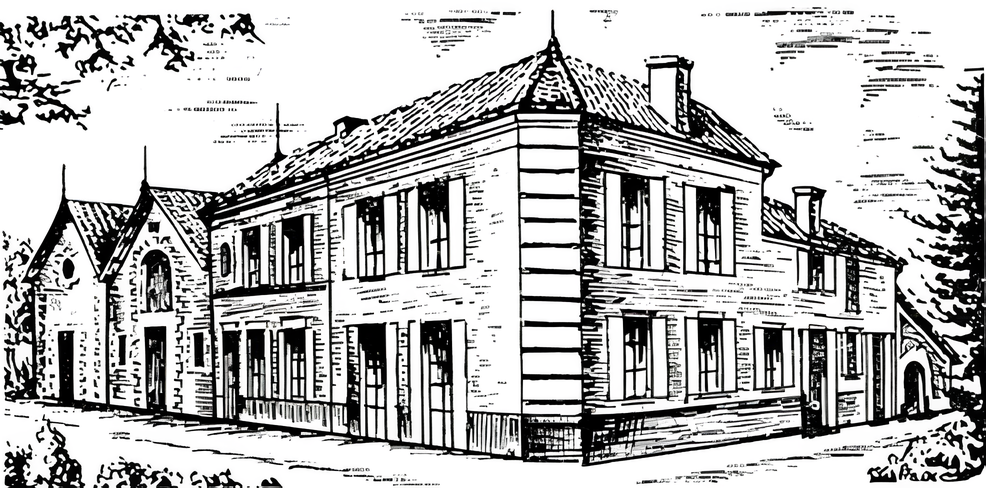
We put a big emphasis on wine tourism! We launched a guinguette at Le Tuquet, which has been a great success in a very beautiful farm enclosure. Two years ago we also created a Bulle Verte trail linking our two châteaux, with architectural histories that are very important and until then not very well showcased. I used my art history training to rethink these places. It is a real half-day trail, with a walk through the forest and along the banks of the Gât Mort. The person in charge of the Saucats hydrographic network puts together activities for us that tell of the fauna and flora in the forest. It is also an opportunity for us to speak about our interest in our ecosystem, even though we have not opted for conversion to organic but for alternative methods, with nest boxes, flowering fallows, biocontrol products and even the forthcoming presence of pigs in our vines. At Le Tuquet we offer picnic baskets with local produce for a moment we want to be out of time.
How do you share out the tasks within the company?
The split is quite simple. My husband creates the wine and looks after the winemaking, and I look after the ecosystem and wine tourism. Until recently, we were both in charge of sales. Given the difficulty, we decided to bring on board a sales director.
How do you win over or win back audiences?
You have to create something new! That is our good solution (laughs). We started by changing the packaging of the bottles; whether making the château disappear or keeping it as a watermark, we opted for Art Deco. The wines have also changed a great deal; we have changed their profiles while keeping – for some of them – the typicity of the Graves wines we love so much. So much so that our Couloumey white, appreciated by the general public and by leading sommeliers, nearly got turned down by the ODG. There is a small issue in that AOPs do not evolve at the pace of the markets! We talk a lot with the ODG! We will soon plant an experimental plot on our land, to try grape varieties resistant to climate change, to see whether they adapt to the Graves terroirs. We have developed a range of red wines with little or less oak. Probably because we are neo-winegrowers with no dogma!
Graves, land of whites?
Yes, we are convinced of it! We are in fact going to carry out a massal selection from our very old Sémillons – up to 68 years old! We believe strongly in the whites of Graves and enormously in our wonderful old Sémillons.
Do you have a mantra?
I don’t have a mantra that guides me. On the other hand, I was brought up in a large family that loved to entertain. I have carried on that desire for sharing and social connection, particularly through our wine tourism activities. So my mantra would be sharing.