


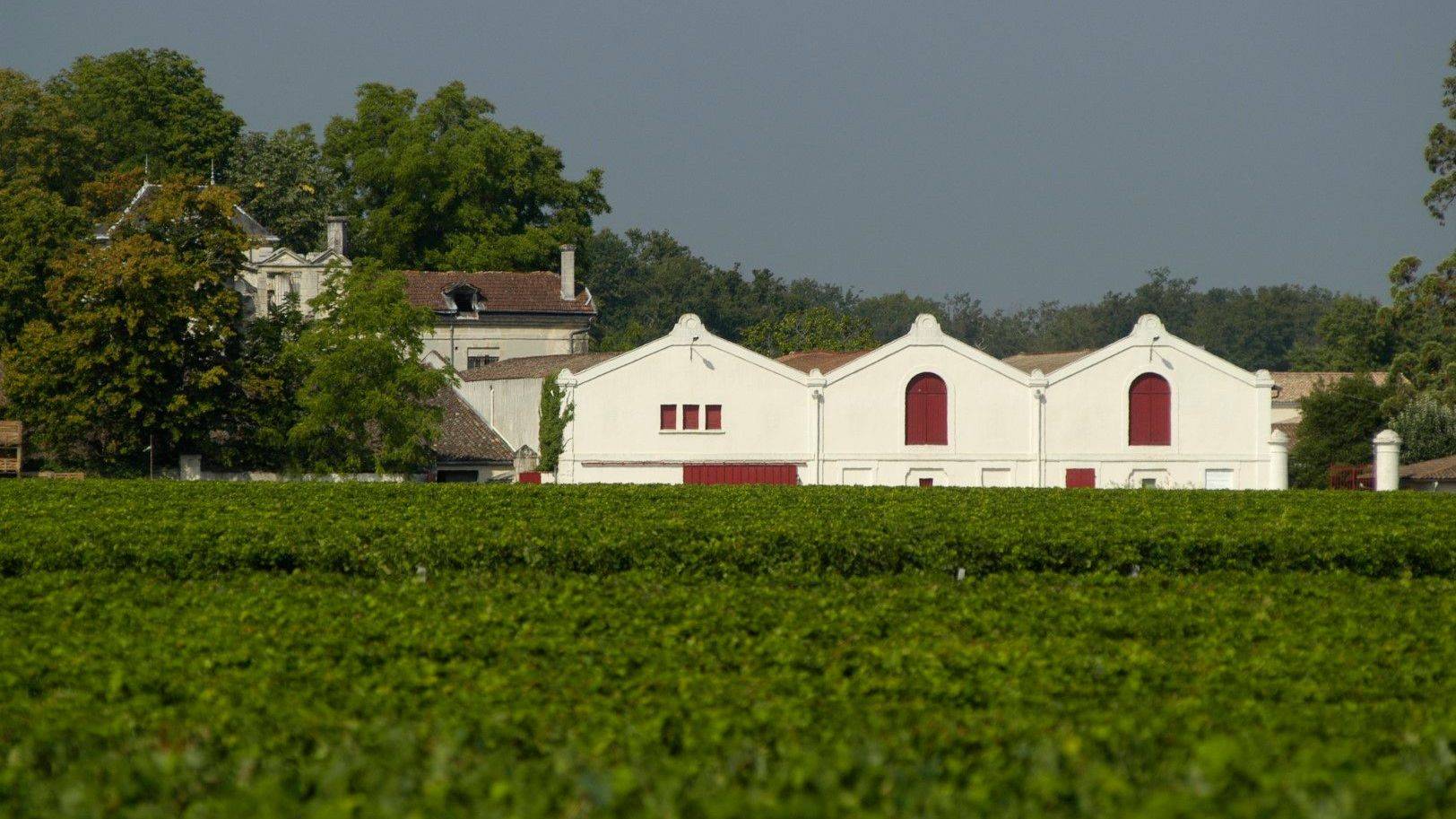
Originally called Château Terrefort, after the name of the old seigneurial estate on which it was built, the château is thought to have been built at the end of the 17th or the beginning of the 18th century, on the site of a probably medieval fortified house. Initially conceived as a low chartreuse, it was raised during the same 18th century.
It belonged to Mlle Lecomte in 1704; then to M. du Tyrac, who sold it to M. Robert Dillon, equerry to the king, for 150,000 livres. The Dillons were, like the O’Connors and the Lynchs — who settled at Breillan, another château in Blanquefort — an Irish family exiled in France at the end of the 17th century. The estate remained with the Dillons until the Revolution, then was confiscated by the State in 1793. Théobald Dillon, third son of Robert, nevertheless managed to buy it back while his two elder brothers were still in exile. In 1829, François Seignouret acquired it. While enlarging the vineyard, he developed the sale of his wine in America, particularly in New Orleans, where he had set up a trading house. It was he who created the Château Dillon label, whose name supplanted that of Château Terrefort at the end of the 19th century.
In 1874, the estate still belonged to Mme Veuve Seignouret. At the beginning of this century, Château Dillon became the possession of M. Filipini, heir of the Seignourets. The last known owner was the Vicomtesse d’Arlot de Saint Saud, who sold it to the Ministry of Agriculture in 1956. The estate’s land had by then already been leased, since 1923, by the regional school of agriculture (now an agricultural lycée).
It was at the expiry of the 30-year lease that the ministry bought the whole estate, château included.
In winemaking terms, if before 1840 production was limited to 7 or 8 barrels, it rose to 130/150 barrels around 1866, thanks to the development work of François Seignouret. The wines were shipped entirely to the United States, where they enjoyed great favour and were the delight of American families of French descent.
In 1874, with its 52 hectares, the vineyard was the largest in Blanquefort.
At the beginning of the century, the vineyard declined. Today, developed by the agro-viticultural lycée of Bordeaux-Blanquefort, Château Dillon remains one of only five Crus Bourgeois in this commune, out of the 32 counted in 1824. The estate continues to expand, with plantings in 2004 and 2005 of 2.20 hectares and 2 hectares.
Vineyards and vinification are managed according to Médoc traditions, while calling on modern techniques to obtain the best quality and with concern for preserving the environment (yield control, integrated production, etc.).
Ageing takes place in oak barrels, 30% of them new. Bottling takes place after 18 months.
With the same care, the agro-viticultural lycée of Blanquefort operates a white vineyard of 2.5 hectares, known as Château Linas, which produces about 16 barrels of A.O.C. Bordeaux dry white wine and a second Haut-Médoc, Château Breillan. The presence of the Institut français de la vigne et du vin and of the vine and wine services of the chamber of agriculture makes this site an exceptional place in the wine world. These two bodies, together with the local public establishment for agricultural education and vocational training of Bordeaux Gironde, form the Vinopôle Bordeaux-Aquitaine.
Château Dillon
Haut-Médoc • 185 HA


