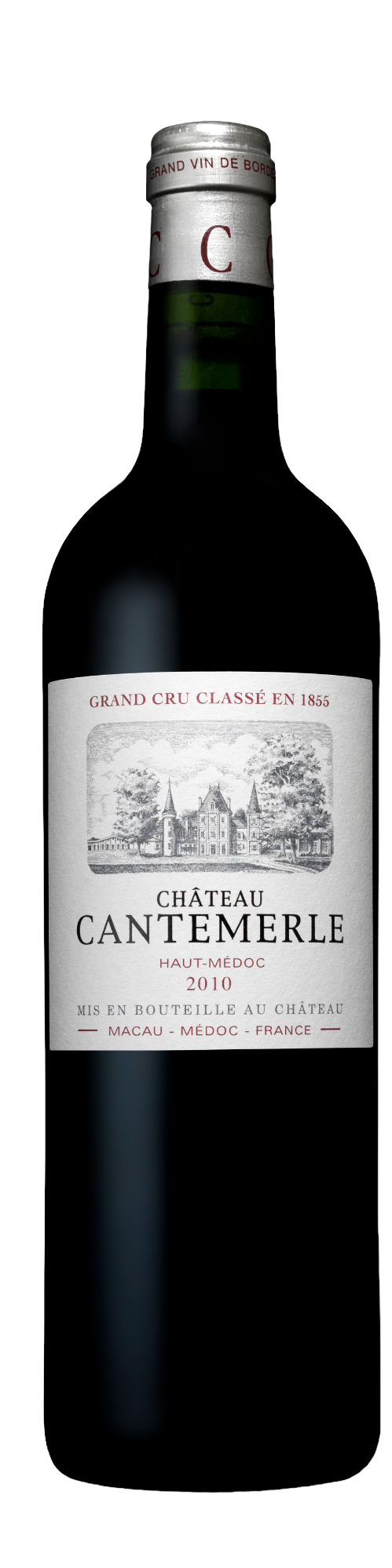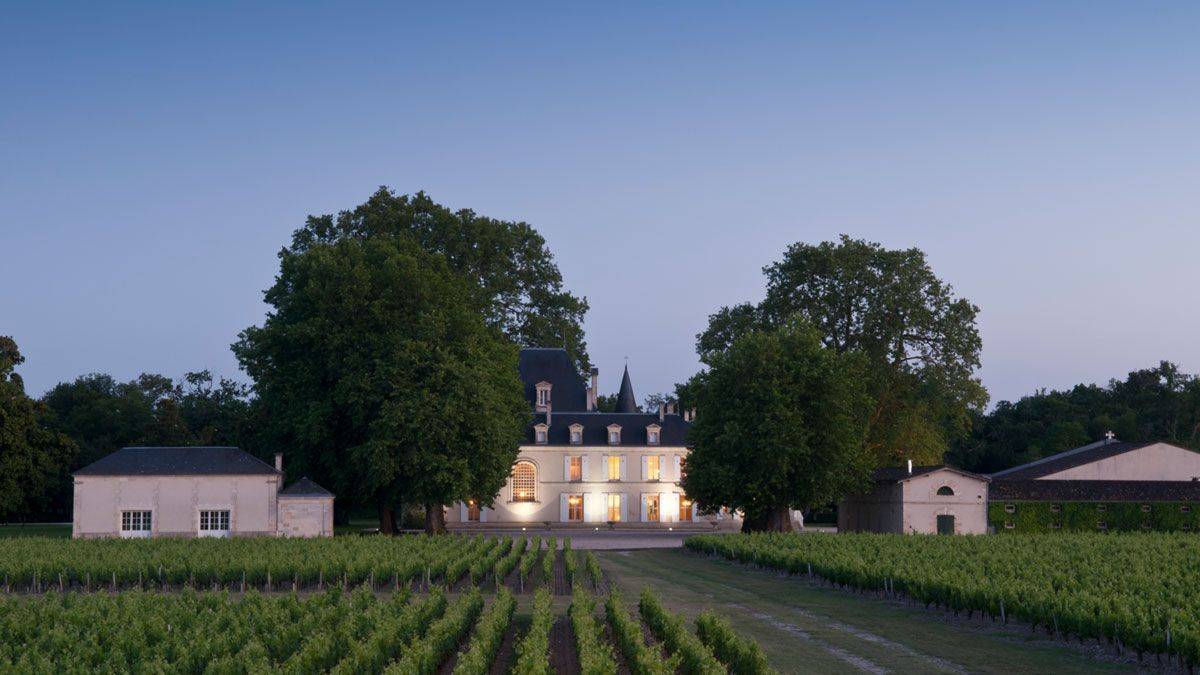
At the gateway to the Médoc, in a luminous clearing, stands Château Cantemerle, built in the 18th and 19th centuries. It has retained some vestiges of its former grandeur, notably a very fine 16th-century tower. The old château was then located on the banks of the Garonne and formed part of the line of fortifications defending the banks of the Médoc, about 1 km from the present château.
The lordship of Cantemerle extended its feudal rights over various fiefs and noble parishes. During the 13th and 14th centuries, the powerful lords of Blanquefort united it with their vast possessions.
The first traces of wine production on the estate date from as early as 1354: the Lord of Cantemerle paid the tithe with a barrel of claret!
In 1579, a high magistrate, Jehan de Villeneuve, acquired this seigneurial land, which was to remain in his family for three centuries.
This change of owner brought about a new type of farm that was beginning to develop in the Médoc: the Bourdieu. The Bourdieu was an agricultural holding in which the vine always occupied a predominant place. In the 16th century, wine growing became the main activity of the Cantemerle estate. It was no longer subject to the medieval seigneurial management that imposed cens and agrières, but was managed by the owner by means of a sharecropping lease. This type of lease ensures a higher income (half of the harvest), and the relatively short term of the lease (3 to 5 years) gives the lessor the possibility of better controlling the management of his property.
In 1866, the part of the property devoted to vines in a single block was 110 hectares (out of the 400 that the estate comprised), producing on average 150 to 160 barrels of first wine and 50 to 60 of second wine. That is a yield of 18 hl/ha.
In 1892, it became the property of the Dubos family, who would sell it nearly a century later, in 1981, to the Mutuelles d’Assurance du Bâtiment et Travaux Publics (SMABTP), thus marking the arrival of major institutional investors in the French wine landscape.
Classified in 1855, Château Cantemerle extends its vineyard over plots of fine gravel bordering the Gironde estuary. Here, human intervention and the use of noble materials have been favoured.
At harvest time, the grapes are picked and carefully sorted by hand before joining large oak vats in which the production of each plot is vinified separately.
The selections that precede the blending make it possible to determine the split between first and second wine, a guarantee of rigour and quality for a Cru Classé.
Château Cantemerle
5e Grand Cru Classé en 1855
Haut-Médoc • 184 HA