If you had to introduce yourselves, present your activity and set out your vision?
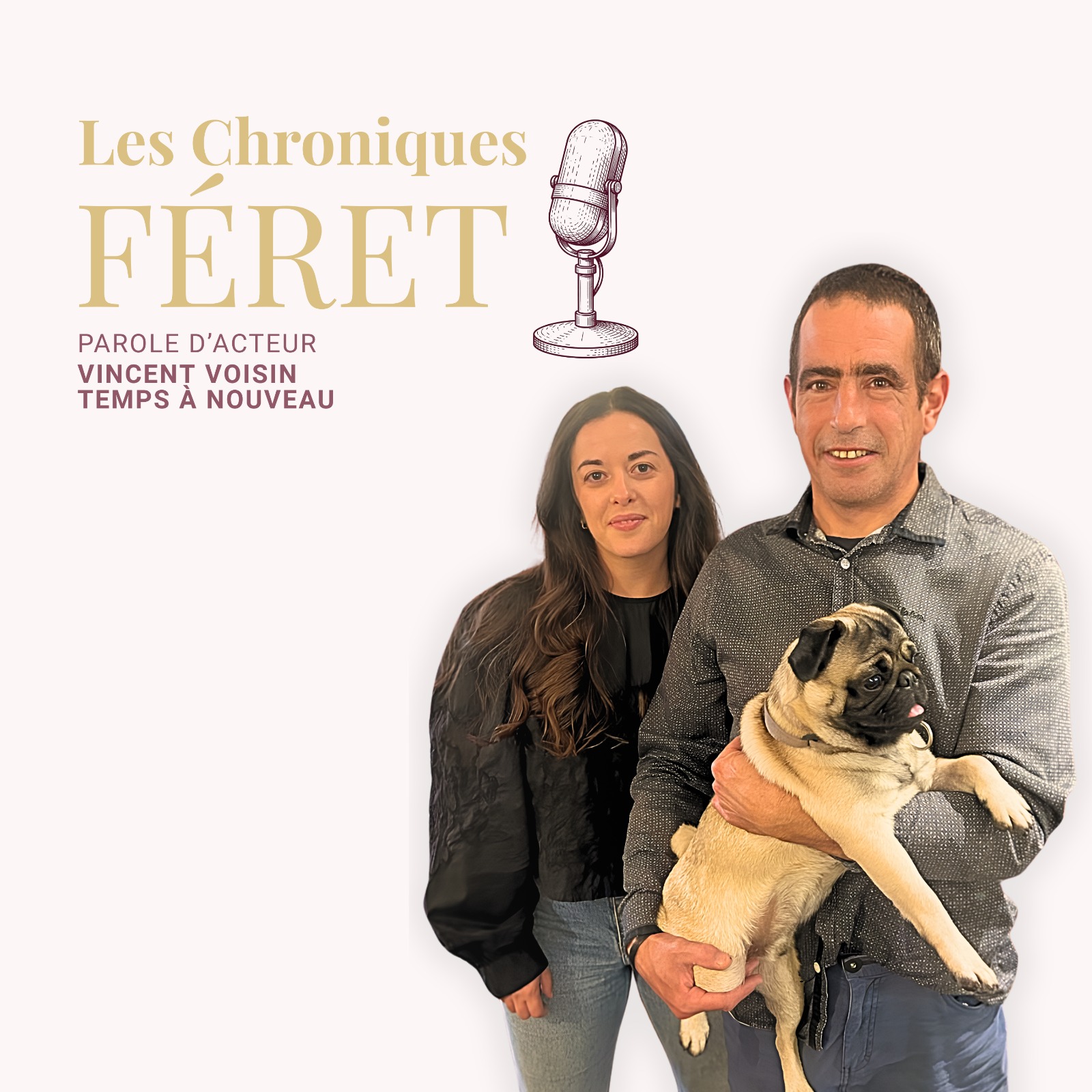
Cécile Cazaux : We are both oenologists from Bordeaux with rather singular experiences. Our practice, created in 2011, offers only consulting services, with no analysis activity and no product sales. This positioning consequently obliges us to be dynamic and to be a source of proposals in our advice. We like the expression “getting our shirts wet”! Indeed, taking positions does not frighten us. And we stand by them.
What Frédéric and I have in common is that we have worked with Patrick Ducournau, brought up on his international vision of the wine world. We know the world of Bordeaux well, from the grands crus to the smallest, by way of the Gironde wine institutions and the various players in the industry.
We do not set the “industrial” wine world against the “artisanal” wine world. Each has its place and each meets a demand. Terroir wine, brand wine. It is all fascinating and complementary, from vineyard management to oenological processes. We have to serve different consumers. Those who understand the notion of terroir and vintage, and those who seek repeatability in products. And also satisfy different consumption occasions: aperitifs, cocktails, dinners… Bordeaux has its full place and must take a turn today.
Frédéric Mignot : Our scientific background built us, and that is partly what characterises us today. And it is important in defining Œnomaîtrise. These common foundations lead us to speak with one voice and to follow a guiding line that keeps us from getting lost or scattered in our day-to-day work.

As the DNO training requires, doesn’t it?
FM : Yes, but we also make it our alpha and omega, and we fully own that. In a context where we are witnessing a growing questioning of scientific culture, we remain attached to the fundamentals and the consistency that goes with them. Too many people are seen drowning in details, to the detriment of an overall vision, and thus missing the priority actions. In our assignments we make a point of putting things back in the right order. Managing oxygen supply in wines, in which we are experts, is a good example of this. Because you cannot address this subject in the cellar until everything has been done to obtain wines with a reductive profile, compatible with working with oxygen.
Is this how you define the mindset with which you approach your profession?
CC : I think that by laying down the fundamentals, we reassure our clients. We have many researchers in Bordeaux on specialised subjects, and they help us progress. But let us not forget the fundamentals of the trade. They must be mastered before going further. We are often led to simplify, which is very difficult. I would add that we always take the risk of (having) our actions validated. We seek feedback on each of our options and their financial impact. Our leitmotif remains to optimise the profitability of the businesses we work for. Control of production costs, reducing the share of second and even third wines. Without of course seeking to lower quality, quite the contrary… Not doing the superfluous, and not forgetting the essential.
Hasn’t science as the sole compass distanced the public from wine, from its irrational side?
CC : I would say, by analogy, that in haute cuisine nothing is left to chance. I apply that to our profession.
FM : Some look for this chancy part so as not to rely on science alone, where feeling drives preferentially. I would say that a part always eludes us a little, we cannot control everything, and that is a good thing. But with a growing concern for precision in wine profiles, preferring a scientific approach seems to me a prerequisite. Campaigning for an overly esoteric approach exposes winegrowers to enormous risks, as they thereby mortgage their production.
CC : Œnomaîtrise campaigns for a scientific approach that does not exclude the artistic aspect. I come back to the parallel with great chefs, in whom there is a part of fantasy that expresses itself only because the musical notation is mastered. These fundamentals are necessary to create, invent, diversify and thus avoid falling into wine standardisation.
Is Œnomaîtrise responding to the crisis in this way?
FM : We hope that our technical support and our pragmatism help our winegrowers as much as possible. Faced with this crisis, we must be a source of proposals through the creation of new wine profiles, from bubbles to various red wines to be drunk fresh, by way of low-alcohol wines, etc. I have never extended my clients’ commercial range with new wines as much as in these last years of crisis.
CC : Bordeaux has all the ingredients to produce wines in tune with the different markets, and has the means to respond to the crisis. To do so, it must build profiled products with a great deal of personality and different from their neighbours. Bordeaux too often falls into mimicry. Perhaps for fear of taking a risk or of being misunderstood? Today, the owners who have initiated genuine styles are less worried by the crisis.
How do you determine the ideal harvest date?
FM : On difficult terroirs, where the grapes have lower potential, one of the ways to make the most of them is not to slip on the harvest date and therefore to pick early. In every vintage, the decision on the harvest date is a genuine commitment that we take on, because the surrounding discourse is always to say that one must wait!
CC : My experience alongside Jean-Claude Berrouet taught me the happy medium. I am against excess. Under-ripeness and over-ripeness: two fashions? I believe far more in ripe “reductive” fruit, but harvesting it calls for accuracy and a measure of intuition and, of course, experience…
What share of responsibility do oenologists bear in the crisis?
FM : The prescribing oenologist should not behave like a “guru”, with all the excesses that entails. Our mission is to support our clients in their decision-making and to enlighten them as best we can. We have an important teaching role, which takes time but which it is necessary to carry out. Unlike the guru, who imposes a radical discourse. In the interest of precision, and to argue our decisions well, we are in the habit of saying that we take the alarm clock apart. It is figurative, but it is clear. (laughs)
CC : The owner still steps back too much behind the consultant oenologist, leaving the impression that the latter makes the wine alone. This is less the case in other wine regions. The production strategy must be collegial. I am against the idea of one recipe applied to everyone, whatever the wishes, situations and contexts. We then fall back into the failings of the standardisation that has perhaps tired the consumer. I think it is our role to put the property at the centre of the discussion and to understand what it wants.
What do you think of the return to favour of the stems?
CC : We have been using it for years already. It is a tool in our toolbox. Its use must fit coherently into the production process, according to the grape profile and the desired wine profile.
FM : It is a natural input, with advantages. The Burgundians, incidentally, use it to bring certain characters to their wines. Stems are not the miracle tool, and are not enough on their own to resolve the effects of global warming.
How do you approach the question of replanting and adapted grape varieties?
CC : The existing Bordeaux ampelographic landscape already allows us to do well. Let us not forget the interest of cuvées made from Cabernet alone, Franc or Sauvignon, a pure delight.
FM: Indeed, if we take the example of Cabernet Sauvignon, it has gained 10 days of ripeness in 15 years. There is no longer any vegetal Cabernet Sauvignon as such. Carménère is also well suited, as it is late, with a very marked typicity, and therefore interesting for making wines with a strong identity.
And 2024 in all this?
CC : This vintage will let us reconnect with certain consumers. We should find drinkability and freshness again. The tannins are not very marked this year. You could extract without unbalancing. It is a vintage that comes at just the right moment. It demanded a lot of work! Above all I expect the press to support this singular vintage.
FM : It is a vintage of the kind we encountered quite regularly before the 2000s. Bordeaux will thus offer drinkable or pleasant-to-drink wines, and that is a very good thing. But making good light wines is not so simple, because to be successful in Bordeaux, wines must be coloured and very aromatic. A big communication effort must be made so that consumers think more about Bordeaux. We regularly carry out benchmarks for clients, and the 10 best-selling brands in the world are references worth knowing that fit these less-coloured, savoury wine profiles.
A vintage for technicians more than for terroir?
FM : Some terroirs played spoilsport, such as the very free-draining terroirs, where we had to react quickly. So yes, it is a technical vintage that calls for genuine know-how.
CC : A complex vintage, of winegrowers and of technicians. Once again, the result is the fruit of teamwork.