From Pomerol to Vin de France
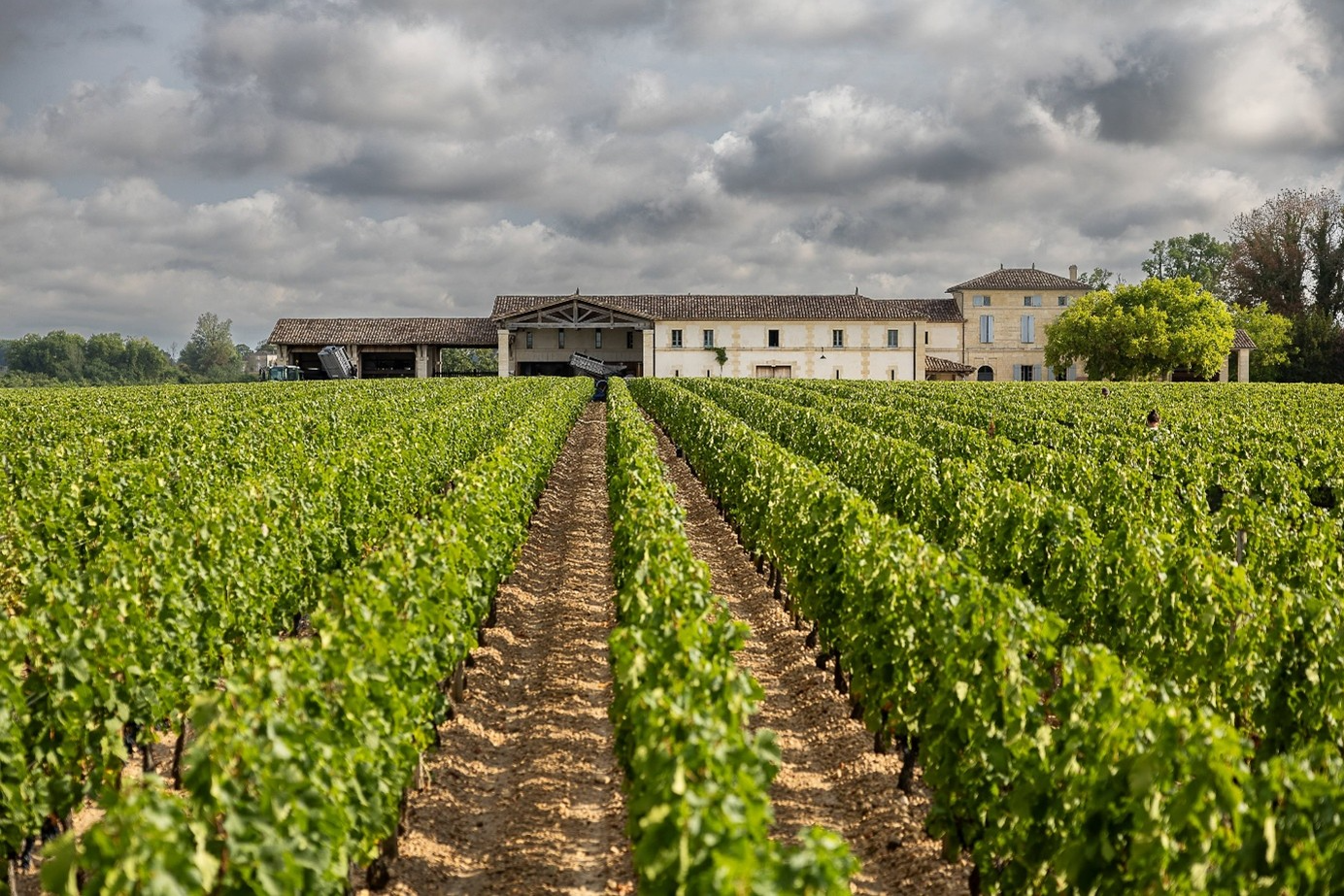
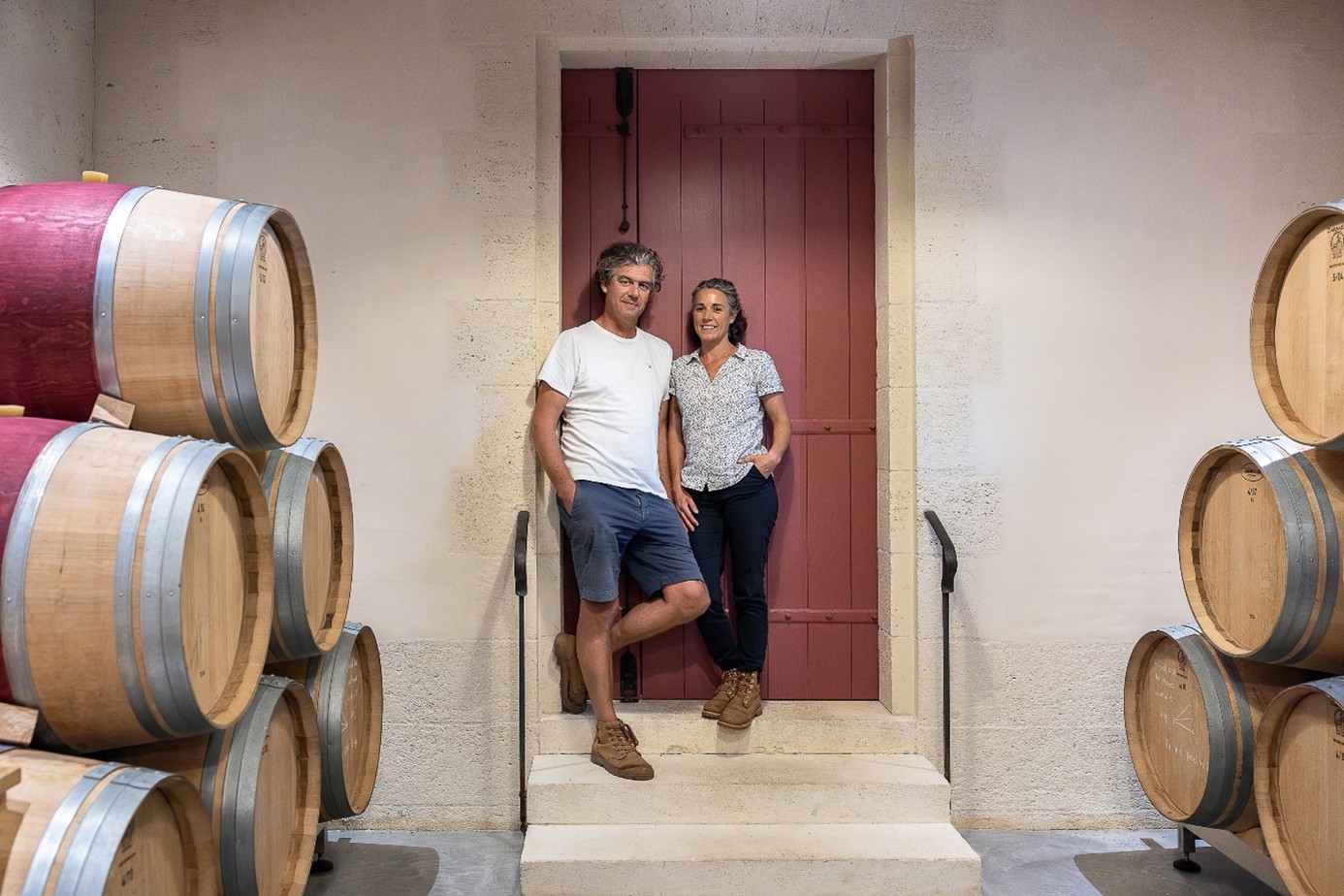
The recent decision by this highly respected Pomerol château has been a gift to the specialist media, and not only to them: it has left the ranks of the appellation to join the supposedly humble Vin de France category. The news was certainly a surprise, since Château Lafleur is held in very high esteem within an appellation that has no formal classification and whose elite owes its status to merit alone. The paradox of the situation is that such a well-endowed estate should choose to leave a “comfort zone” for a status that seems a priori so unflattering given its renown. In this respect, it is worth knowing that the Vin de France designation, which applies to wines that cannot claim any geographical origin, is also seen as a refuge for wines that stand apart from the norm, in the highest sense of the phrase. It is obviously in this light that we should view the decision by its winegrowers, Julie and Baptiste Guinaudeau, to free themselves from the rules of the Pomerol appellation in order to sound the alarm over the increasingly glaring effects of climate change on the vine.
Unmistakable climate change
In two very explicit press releases, published on 24 and 26 August respectively, the Guinaudeau family officially announced its final decision to give up the Pomerol and Bordeaux appellations d’origine for all of its wines from the 2025 harvest onwards. It should be noted that the family also owns an estate producing under the Bordeaux appellation, Château Grand Village. Its entire production will therefore now be declared as Vin de France, as the Guinaudeau family has no other option for this withdrawal. In its announcements, it states unequivocally that climate change is the sole reason for its decision, citing as witnesses the vintages that foreshadowed its change of course. Thus, starting with 2003, the first significant, though still isolated, milestone of this change, it points to the vintages that warned it to varying degrees, before insisting on 2019, 2022 and finally 2025. We also learn that from 2010 onwards, the climatic constraints on the vines led its winegrowers to rethink how they were managed, accompanied by experiments designed to respond to the disruption that has marked the seasons of recent vintages and, in all likelihood, those to come. With very deficient rainfall, combined with persistent heat and heatwave episodes, 2025 was a point of no return, forcing them to use methods outside the provisions of the appellation’s specifications. And it was at this price that they were able to secure a harvest worthy of the reputation for excellence that the Lafleur name carries.
Managing the vines differently
With a breadth of vision that put the evolution of the Bordeaux vineyard since phylloxera into perspective, Baptiste Guinaudeau shared with me the protocol for managing his vines, introduced with the 2025 vintage. Before presenting his concrete actions, he stressed what now determines his approach: years in which the disruption of the seasons has meant a clear softening of winters, thereby accentuating the earliness of the vine’s cycles. To anticipate this hurried rhythm, he has introduced new practices, of which canopy management is not the least, with a view to protecting the bunches from excessive heat and sunshine. In this respect, he challenges the systematic approach that governs canopy height, though it is widely accepted and used, replacing it with a method based on the fruit rather than on the layout of the plantings. In seeking a good leaf-to-fruit ratio, he correspondingly reduces the height of the foliage inherited from previous practices. He also takes care to protect the berries from solar radiation as far as possible by thickening the vegetation around them, while leaving gaps to encourage air circulation around the bunches. This painstaking care, which he rightly calls “fine-tuning”, is the work of a seasoned team that is involved in the work of the vineyard throughout the year and takes part in the winemaking.
Coping with drought
The other major impact of climate change is water shortage, aggravated by erratic rainfall that arrives in fits and starts and is deficient for long periods, as the pattern of 2025 illustrates perfectly. To this observation the winegrower adds that great soils are characterised by moderate water reserves, hence their sensitivity to the water deficits that have become more pronounced in recent years. To address this problem, which closely affects the Lafleur terroir, he combines soil work with a measured form of irrigation to create what he calls a “water floor”. Opposed to feeding the vine through drip irrigation, which tends to make the plant dependent on that regime, he opts for a reasoned and very occasional supply. In keeping with his own method, singular if ever there was one, water is introduced into the soil right at the roots by fissuring it with a device similar to the one he uses to work the surface layer. This avoids the phenomenon of cavitation, in other words the formation of air pockets caused by drought, which are harmful to the plant’s nourishment as well as to soil biology. And it was by taking such measures that the grapes of the vintage now ending reached harvest in excellent health and with, to say the least, promising potential, while holding a moderate alcohol level for a hot year.
An apostle’s stance…
As Baptiste Guinaudeau sets it out, Château Lafleur’s bold choice is a call for awareness of what its winegrower does not hesitate to describe as a catastrophe foretold. His attitude, however, is not one of rebellion against the appellation system, which he does not condemn in the slightest, even praising its major and beneficial role in other times. Although he does not consider himself a whistleblower stricto sensu, his stance comes close to it, especially as it is accompanied by practical recommendations based on his own experience, which he shares with anyone who wishes to listen. Designed as a response to climate change, this approach to viticulture does not, however, call into question an asset that is part of our heritage: grape varieties. It thus perpetuates its attachment to the varieties at the origin of the greatness of its wines, despite a nature that is less and less “accommodating”.
Mohamed Boudellal